
Politics
Trump Announces Increase In Global Tariff Rate, Vows Additional Moves
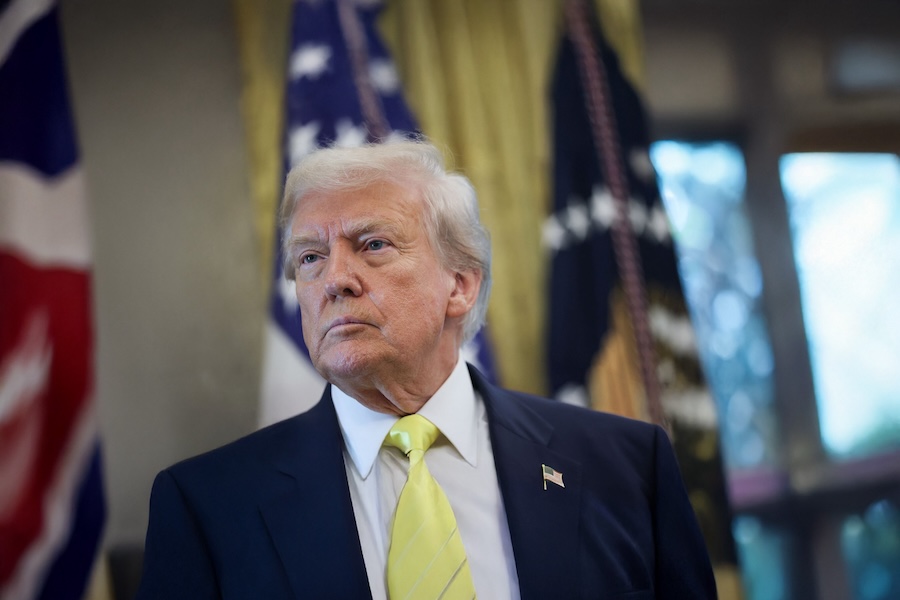
President Donald Trump announced Saturday an increase in the global tariff rate on imports from 10 percent to 15 percent. The change — which comes just a day after the administration was forced to restructure due to a controversial Supreme Court ruling — took effect immediately and applies to goods imported from most countries.
The announcement came one day after the U.S. Supreme Court issued a 6-3 ruling on in the consolidated cases Learning Resources, Inc. v. Trump and Trump v. V.O.S. Selections, Inc. The Court held that the International Emergency Economic Powers Act (IEEPA) does not authorize the president to impose tariffs.
Chief Justice John Roberts wrote the majority opinion, joined by Justices Sonia Sotomayor, Elena Kagan, Neil Gorsuch, Amy Coney Barrett, and Ketanji Brown Jackson. Justices Clarence Thomas, Samuel Alito, and Brett Kavanaugh dissented.
The ruling invalidated tariffs that Trump had imposed in 2025 under IEEPA, including duties related to trade deficits and drug trafficking from countries such as China, Mexico, and Canada. These measures had significantly raised the average U.S. tariff rate and generated substantial revenue.
Following the decision, Trump issued an executive order on ending the IEEPA-based tariffs. He then imposed a new 10 percent tariff on most global imports under Section 122 of the Trade Act of 1974.
This provision allows the president to impose tariffs of up to 15 percent for a maximum of 150 days to address large and serious balance-of-payments deficits or fundamental international payments problems. After 150 days, congressional action is required to extend the tariffs. No previous president had used Section 122 for this purpose.
A day later, Trump announced that the rate would be increasing to 15 percent.
“I, as President of the United States of America, will be, effective immediately, raising the 10% Worldwide Tariff on Countries, many of which have been ‘ripping’ the U.S. off for decades, without retribution (until I came along!), to the fully allowed, and legally tested, 15% level,” Trump posted on Truth Social.
He added that his administration would determine and issue additional legally permissible tariffs in the coming months.
The new tariffs under Section 122 include exemptions for certain goods, such as agricultural products, pharmaceuticals, electronics, and specific minerals and metals. Imports from Canada and Mexico are also excluded under existing trade agreements.
The administration has indicated plans to pursue further actions, including investigations under Section 301 of the Trade Act of 1974, which could result in additional country-specific or product-specific tariffs following required processes.
The shift to Section 122 provides a temporary framework while the administration explores longer-term options. The 150-day limit means Congress will need to decide whether to extend or modify the policy later in 2026.
