
Politics
Trump Ends Biden-Era Restrictions On Oil Drilling

The Trump administration on Thursday finalized the rollback of Biden-era limits on oil and gas development across a massive stretch of federal land in Alaska, marking one of President Donald Trump’s most sweeping energy decisions since returning to office.
The move rescinds a 2024 rule issued under former President Joe Biden that blocked oil and gas leasing on 10.6 million acres of the National Petroleum Reserve in Alaska (NPRA) and restricted development on an additional 2 million acres. The reserve — a 23-million-acre expanse originally designated in 1923 as an emergency fuel supply for the Navy — is the largest tract of undisturbed public land in the United States and has long been at the center of partisan debate over its future.
“By rescinding the 2024 rule, we are following the direction set by President Trump to unlock Alaska’s energy potential, create jobs for North Slope communities and strengthen American energy security,” Interior Secretary Doug Burgum said in a statement. “This action restores common-sense management and ensures responsible development benefits for both Alaska and the nation.”
The administration announced the policy shift in a press release Thursday, saying it was issuing a final rule to formally undo the Biden restrictions on 13 million acres within the reserve. Officials did not immediately provide the formal rescission document, which is expected to be published in the Federal Register on Friday.
The decision aligns with President Trump’s broader agenda to ease regulations on domestic production and expand access to energy-rich federal lands. Supporters argue that reopening the blocked acreage will boost employment, increase revenue, and strengthen U.S. energy independence after years of regulatory constraint.
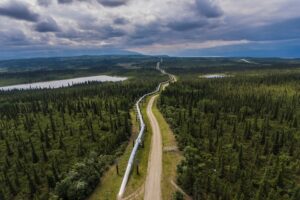
Oil pipeline through landscape alaska
An Alaska Native organization, Voice of the Arctic Inupiat, voiced support for the rollback, pointing to the essential role that oil and gas infrastructure plays in sustaining North Slope communities. The group said drilling operations significantly contribute to local tax revenues that fund healthcare, education, and other vital public services.
The Biden administration’s 2024 rule had been framed as an environmental protection measure, restricting development in what Democrats consider ecologically sensitive areas of the reserve. But Republicans and Alaska leaders have long argued that responsible drilling can coexist with environmental stewardship while providing crucial economic benefits for the region.
The Trans-Alaska Pipeline System (TAPS) is one of the most significant energy infrastructure projects in U.S. history. Built between 1974 and 1977 after the discovery of major oil reserves at Prudhoe Bay, the 800-mile pipeline was designed to transport crude oil from Alaska’s North Slope to the port of Valdez in the south, where it can be shipped to refineries.
The pipeline crosses mountain ranges, rivers, and permafrost, requiring innovative engineering solutions such as elevating large sections above ground to prevent heat from melting the frozen soil. At its peak in the late 1980s, TAPS moved more than 2 million barrels of oil per day, though throughput has declined as North Slope production has fallen.
The pipeline remains a critical component of America’s energy infrastructure, supporting thousands of jobs and generating substantial revenue for Alaska through taxes and royalties. It is operated by Alyeska Pipeline Service Company.
With Thursday’s action, the Trump administration’s earlier proposal to undo the Biden rule is now final, reopening access to millions of acres once again and setting the stage for expanded energy development in one of the country’s most resource-rich frontiers.
