
Politics
Trump Extends Iran Deadline As Talks Continue Amid Ongoing Conflict
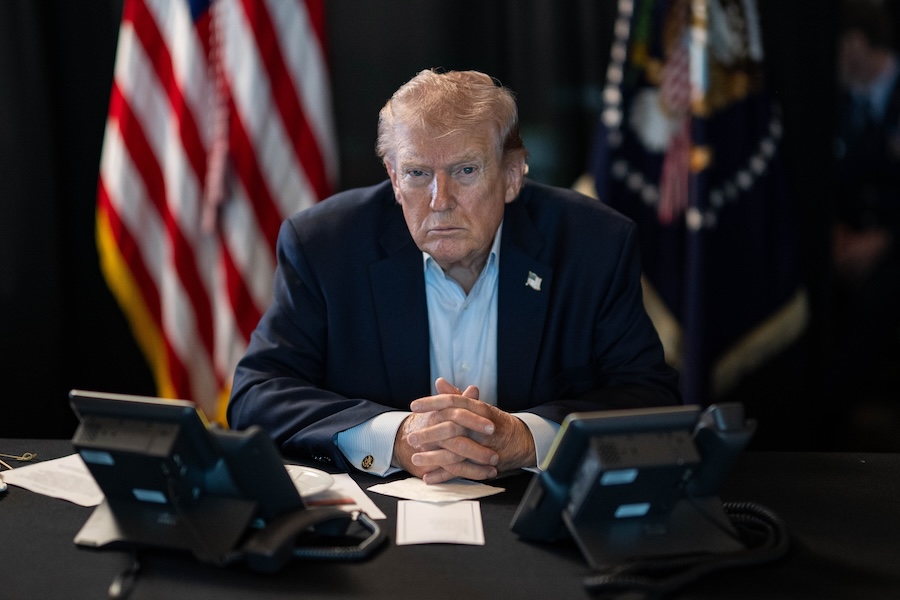
President Donald Trump announced Thursday that he is extending a key deadline tied to U.S. military operations against Iran, signaling a possible diplomatic opening even as tensions remain high across the region.
In a post on Truth Social, Donald Trump said he would pause the “period of Energy Plant destruction” for an additional 10 days, pushing the deadline to April 6, 2026, at 8 p.m. Eastern Time.
“As per Iranian Government request… I am pausing the period of Energy Plant destruction by 10 Days,” Trump wrote, adding that negotiations are “going very well,” despite what he described as inaccurate reporting from the media.
The announcement comes as the conflict involving the United States, Israel, and Iran has escalated into a larger regional war in recent weeks. U.S. and Israeli forces have carried out coordinated strikes targeting Iranian military infrastructure and energy-related sites, while Iran has responded with retaliatory attacks through both direct and proxy channels.
The decision to delay further strikes on Iran’s energy sector appears aimed at preserving space for ongoing diplomatic efforts. Energy infrastructure has been a central pressure point in the conflict, given its role in Iran’s economy and its connection to global oil markets.
Much of the economic fallout has centered around disruptions near the Strait of Hormuz, a critical chokepoint through which a significant portion of the world’s oil supply passes. Any sustained instability in the region has raised concerns about global energy prices and supply chains.
Trump, however, has maintained that Iran is actively seeking a deal, at one point claiming the country is “begging” to negotiate. At the same time, he has warned that failure to reach an agreement could result in intensified military action, including potential strikes targeting senior leadership.
A source familiar with the ongoing mediation said to Axios that, despite publicly rejecting the U.S. proposal, Iranian officials have privately signaled a willingness to continue talks.
However, the same officials have not yet provided a final answer on whether they will participate in a high-level meeting with the United States in the coming days. According to the source, mediators are actively pushing Tehran to commit, but Iranian representatives insist that a decision has not yet been made by the country’s senior leadership.
“The key issue for the mediators is to make the meeting happen. But the main problem has been mistrust and the Iranian suspicion that the U.S. is tricking them again,” the source said.
The administration has stopped short of formally declaring the situation a war, a move that would trigger additional legal and congressional considerations. Still, U.S. forces remain heavily engaged, and military operations have continued alongside the diplomatic push.
The 10-day extension places the conflict at a critical juncture. For now, the region remains in a volatile holding pattern, with both sides balancing continued military pressure against the possibility of a negotiated outcome.
White House envoy Steve Witkoff said Thursday during a Cabinet meeting that several countries — including Pakistan, Egypt, and Turkey — have recently reached out to Washington offering to help mediate.
“This has resulted in strong and positive talks … we will see where things lead and if we can convince Iran that this is the inflection point with no good alternatives for them other than more death and destruction. We have strong signs that this is a possibility,” he said.
RELATED:REPORT: Thousands Of U.S. Marines Expected In Middle East By Friday
