
Politics
Trump Signs Order Giving Parents More Flexibility On Childhood Vaccines
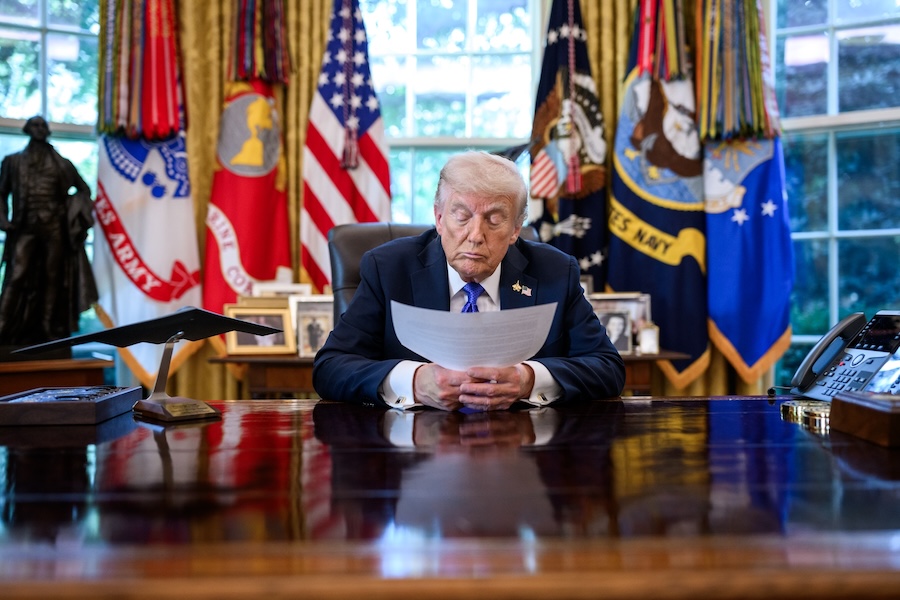
President Donald Trump signed a major executive order Monday calling for significant changes to the nation’s childhood vaccination recommendations, including spacing out certain vaccines and giving parents and doctors greater flexibility over when children receive routine shots.
The order directs federal health officials to reassess the timing and sequencing of childhood vaccines and encourages administering vaccines individually rather than combining multiple immunizations during a single medical visit. Trump also called for the measles, mumps and rubella vaccine, commonly known as MMR, to eventually be separated into three individual shots administered at different visits.
“Effective immediately, my administration is recognizing gold standard childhood vaccine recommendations for only 11 core vaccinations against the most serious and dangerous diseases, along with the MMR, which hopefully will be split up,” Trump said during an Oval Office signing ceremony Monday.
The administration’s plan builds on changes pursued by Health and Human Services Secretary Robert F. Kennedy Jr., who has pushed to reconsider the federal government’s approach to childhood vaccinations. Earlier this year, the Centers for Disease Control and Prevention revised its recommendations so that vaccines against 11 diseases remained universally recommended for children, while several others were shifted toward recommendations for high-risk populations or shared decision-making between families and doctors.
Those changes were subsequently blocked by a federal judge, setting up a legal battle over the administration’s efforts to reshape federal vaccine policy.
Trump’s new order directs HHS to reassess the sequencing and timing of childhood vaccines within 90 days. It also encourages single-disease vaccines “to the maximum extent feasible,” according to the order.
One significant obstacle involves the MMR vaccine. Separate measles, mumps and rubella vaccines are not currently available in the United States, meaning manufacturers would likely need to produce individual versions before Trump’s preferred approach could be widely implemented.
The president argued Monday that spreading vaccinations across additional medical visits would give children’s bodies more time between shots. He also suggested that one-year-old children could receive vaccines across roughly five separate appointments rather than receiving several during the same visit.
The administration says its broader goal is to provide parents and physicians with more flexibility while examining how other developed nations structure their childhood immunization schedules.
Trump has repeatedly raised questions about whether the number and timing of childhood vaccines could be connected to rising autism diagnoses. Scientific research to date has not established a causal link between childhood vaccines and autism, and major medical organizations continue to maintain that the existing vaccines are safe and effective.
The American Academy of Pediatrics has opposed the administration’s recent changes, arguing that different countries face different disease threats and therefore cannot necessarily use identical vaccination schedules. The administration, however, has framed the changes as part of Trump’s broader push to give families greater control over health decisions.
The president began the process in December 2025 by ordering HHS and the CDC to examine vaccination practices in other developed countries. The administration argued that the United States recommended more universal childhood vaccines than many comparable nations and instructed federal officials to determine whether American recommendations should be changed.
Trump followed that effort with another executive order in May directing the CDC and its Advisory Committee on Immunization Practices to consider ways to provide “maximum flexibility to parents and doctors” when determining the timing and sequencing of routine childhood immunizations.
Monday’s order takes that effort another step forward by directly promoting separate appointments and individual vaccines.
States will still play a major role in determining vaccination requirements, particularly those tied to school attendance. The federal government generally issues vaccine recommendations, while states and local governments maintain authority over school vaccination mandates.
The White House is expected to encourage states to review their existing requirements as the administration moves forward with its revised federal recommendations.
POLL: Should Sanctuary Cities Be Banned From Federal Funding?
