
Politics
TSA Experiencing Longest Wait Times In U.S. History As Complete Shutdowns Loom
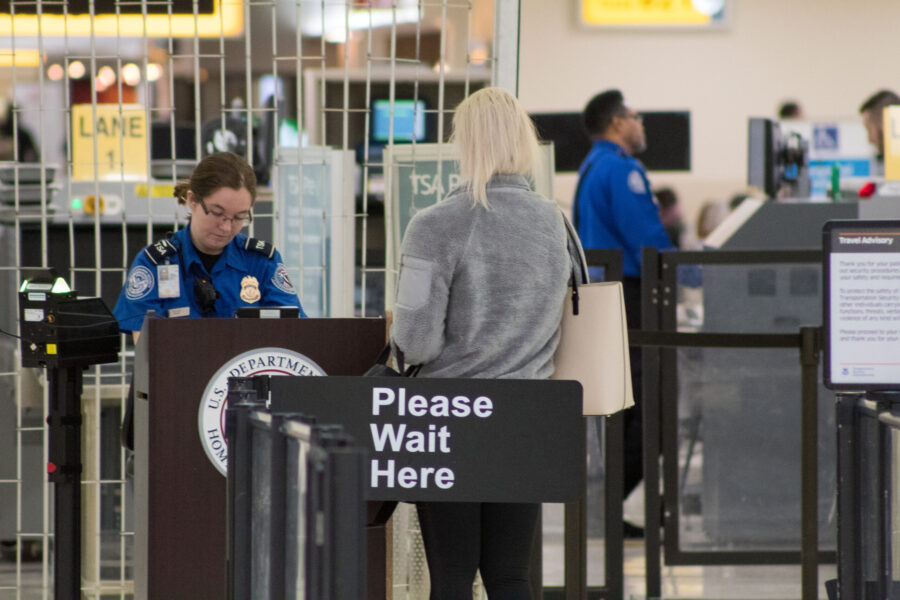
The Transportation Security Administration (TSA) is currently experiencing the longest wait times in the history of the United States as the ongoing Democrat-led shutdown of the Department of Homeland Security (DHS) drags through day 40.
As of March 25, the shutdown stands as the second longest in U.S. history when partial and full shutdowns are considered together, second only to last year’s Democrat-led full government shutdown.
The impasse centers on appropriations for DHS agencies, including the TSA. Senate Democrats have blocked multiple attempts to advance full-year funding bills for the department, which would include operations for U.S. Immigration and Customs Enforcement (ICE) and Customs and Border Protection.
Votes to end the shutdown have failed at least five times in the Senate, falling short of the 60 votes required for cloture. Democrats have conditioned support for full DHS funding on reforms to ICE and CBP, such as requirements for body-worn cameras, judicial warrants for certain actions, and other oversight measures related to immigration enforcement.
While Republicans have expressed openness to some demands, they have been firmly against others, such as judicial warrants, which would effectively end deportation policy as it currently exists.
TSA officers are designated essential employees and have continued to report for duty without regular paychecks during the shutdown. This situation has contributed to elevated absenteeism and resignations. DHS officials report that more than 450 TSA officers have quit since mid-February, following more than 1,100 resignations during the 2025 shutdown.
Call-out rates have reached 10 to 40 percent nationally on some days, with peaks exceeding 50 percent at airports such as Houston Hobby.
As a result, security checkpoints have closed temporarily at various locations, and passenger wait times have increased substantially at major hubs including Atlanta, Houston, New York-area airports, and others. Wait times have varied widely by airport and time of day, with some travelers reporting delays of three to four hours during peak periods.
When you arrive at Terminal E at Bush Intercontinental Airport (IAH) in Houston, the line outside looks fairly manageable. But in reality, it starts in the basement, goes up a floor and zigzags through baggage check, then runs outside before snaking around the check in counters. pic.twitter.com/uv26Rmtngm
— amanda moore 🐢 (@noturtlesoup17) March 24, 2026
On Monday, the Trump Administration deployed hundreds of ICE agents to more than a dozen major airports, including facilities in New York, Atlanta, Houston, Chicago, and Philadelphia. The agents were assigned to assist with airport security operations, primarily by directing passenger flow, managing lines, and performing support tasks that do not require TSA-specific screening certification, such as X-ray interpretation or identification verification.
DHS officials stated that the deployment aimed to augment understaffed checkpoints and reduce delays. TSA union representatives and some aviation security experts have noted that ICE personnel lack the specialized training provided to TSA officers, limiting their role to supplementary duties.
While some airports saw modest reductions during off-peak hours, overall delays have persisted at many locations, with record-high averages reported in certain cases. Absence rates and checkpoint closures have continued to fluctuate based on daily staffing levels.
NYC man reacts to ICE at the airport: “They’re good. They're here to help. They're not botherin nobody. As long as they can check my bagz n get me on my flight, I'm good to go. I wanna get to the Bahamas. I want outta here.”
This is so Brooklyn lol. pic.twitter.com/62qHf5wGb8
— johnny maga (@johnnymaga) March 24, 2026
If the funding impasse continues without resolution, further reductions in TSA staffing could lead to more widespread checkpoint closures or operational interruptions at affected airports. DHS and TSA officials have warned that sustained high absence rates pose security risks and could necessitate scaled-back screening or temporary halts to passenger processing at certain facilities to maintain safety standards.
RELATED: Delta Pulls VIP Travel Perks From Congress As DHS Shutdown Drags On
