
Politics
U.S. Navy SEALS’ Covert Mission In Iran Revealed
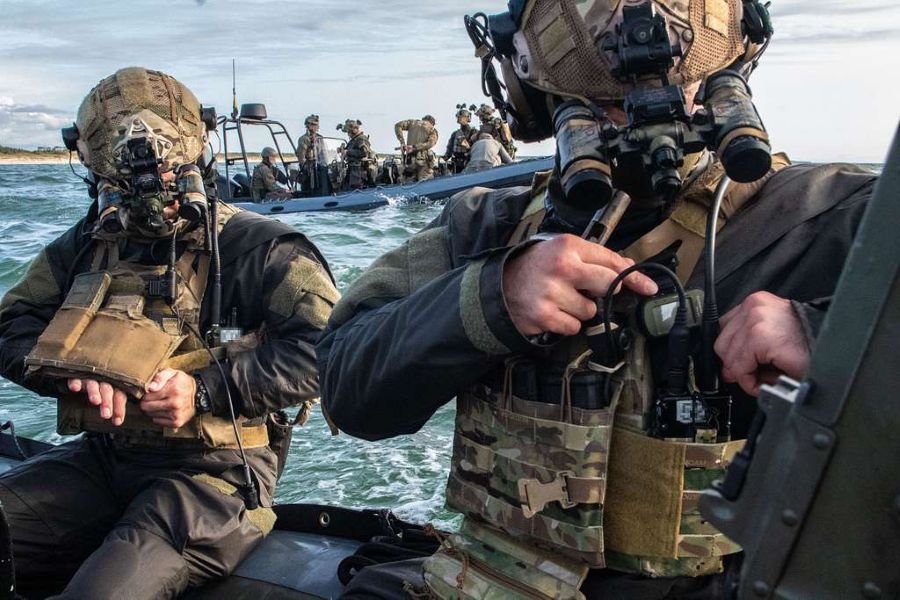
U.S. forces quietly carried out a dangerous four-month operation to clear Iranian sea mines from the Strait of Hormuz, relying on Navy SEAL divers, underwater drones and sophisticated sonar equipment to reopen one of the world’s most important shipping lanes.
The high-risk mission was conducted largely under the cover of darkness as American personnel searched for and destroyed mines allegedly laid by Iran in the strategic waterway, according to a new report.
The operation combined elite divers with unmanned surface vessels and underwater robots designed to locate explosives beneath the surface before crews moved in to neutralize them.
U.S. Central Command publicly announced in April that American forces had begun setting conditions for mine-clearing operations in the Strait, including the deployment of underwater drones.
The work that followed was far more extensive and dangerous than previously known.
SEAL divers were tasked with approaching mines after they had been identified, a process that could require a servicemember to enter the water, move close to the explosive and attach a charge capable of destroying it.
“That is usually followed up by a navy diver who’s got to get in the water and approach the mine, and then put a charge on it and destroy it,” retired U.S. Navy Capt. Bill Hamblet told the Financial Times.
The Navy also relied on unmanned technology to reduce some of the danger to personnel.
Among the equipment reportedly used was the Common Uncrewed Surface Vessel, a robotic boat capable of towing advanced underwater systems such as the MK 18 Mod 2 Kingfish.
The Kingfish uses sonar to scan the seafloor for potential mines, allowing American forces to locate threats without immediately putting divers in harm’s way.
US Navy SEAL divers spent four months clearing Iranian mines from the Strait of Hormuz, according to the Financial Times.
SEAL divers worked at night from inflatable-hulled boats with help from underwater crafts to remove the mines.
“That is usually followed up by a navy diver… pic.twitter.com/NT1gBvQVqA
— Collin Rugg (@CollinRugg) September 7, 2026
Once identified, some mines could be approached and destroyed using unmanned systems, although the process remained painstakingly slow.
No U.S. casualties have been reported in connection with the mine-clearing mission.
The International Maritime Organization estimated earlier this year that roughly 80 mines had been deployed in and around the Strait of Hormuz.
The narrow waterway is one of the most strategically important maritime chokepoints on Earth, carrying a substantial share of the world’s oil and making any disruption a threat to global energy markets.
RELATED: Iran-Backed Proxy Group Launches Ground Offensive Aimed At Further Disrupting Global Shipping
President Donald Trump announced in August that mines had been removed from the international shipping lanes through the Strait.
U.S. Central Command later said American forces had cleared those lanes and were protecting commercial vessels moving through the region.
But concerns have not disappeared.
Iran has continued claiming that mines remain active in parts of the Strait and has been accused by the United States of attempting to restore its ability to threaten shipping through the waterway.
RELATED: JUST IN: CENTCOM Shares Stunning New Footage Of U.S. Pummeling Iranian Oil Tankers
Commercial operators remain cautious, particularly outside areas near the Omani coast where American forces have been escorting ships.
“It’s hard to know what to believe,” Ethan Connell, assistant director of Taiwan Security Monitor and an expert on mines, told the FT. “Iran is certainly trying to re-mine.”
The continuing threat from mines, missiles and drones has kept visible commercial traffic well below levels seen before the conflict intensified.
Some vessels have reportedly moved through the Strait at night with tracking equipment switched off while traveling under U.S. military protection.
The covert mission underscores the scale of the American effort required to keep the Strait open and prevent Iran from using mines to choke a waterway vital to international commerce.
Even after months of painstaking clearance work, the ease with which new mines can potentially be deployed means U.S. forces remain locked in a continuing contest to keep the shipping lanes open.
POLL: Should Trump Cut Off Aid To Countries That Side With Iran Over America?
