
Politics
UN Chief Begs For Donations, Warns Of ‘Financial Collapse’
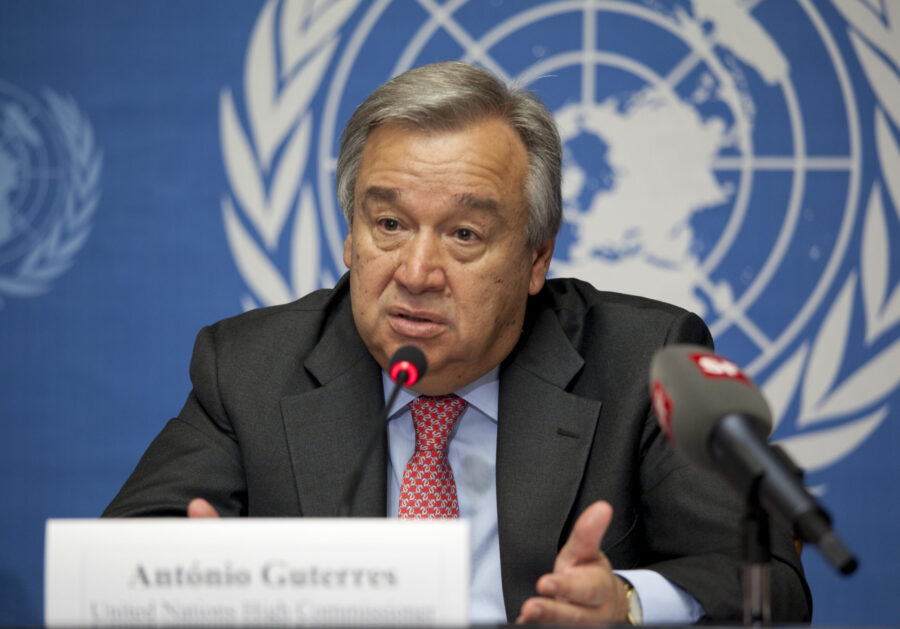
The United Nations is facing a significant financial challenge that could impact its operations, according to recent statements from Secretary-General António Guterres.
In a letter sent to all 193 member states in late January 2026, Guterres highlighted the risk of the organization running out of cash by July if member nations do not fulfill their payment obligations or if financial rules are not revised. This situation stems from a combination of unpaid assessed contributions and existing budgetary mechanisms that exacerbate liquidity issues.
The UN’s funding primarily comes from assessed contributions, which are mandatory dues calculated based on each country’s economic capacity. The United States, as the largest contributor, typically accounts for about 22 percent of the regular budget, Breitbart News noted.
However, at the end of 2025, the organization recorded a record-high $1.568 billion in outstanding dues, more than double the amount from the previous year. This shortfall has been attributed in part to decisions by some member states, including the U.S., to withhold portions of their contributions.
President Donald Trump previously announced that the United States would not pay its full 2025 regular budget share and provided only 30 percent of the expected funding for peacekeeping operations. In addition, the U.S. has withdrawn from over 30 UN agencies and programs, citing concerns over efficiency and alignment with national priorities.
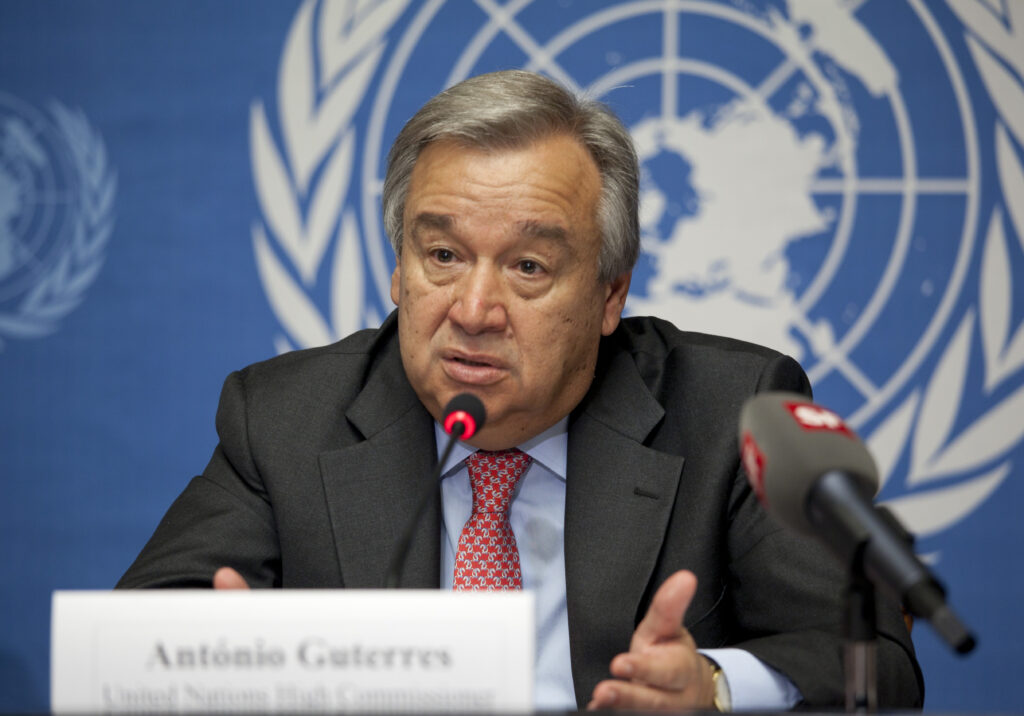
Then-Assistant Secretary of State for Population, Refugees, and Migration and UN High Commissioner for Refugees (UNHCR) Antonio Guterres speaks with reporters in Geneva in 2012
U.S. Mission Photo by Eric Bridiers
Guterres stated that only 77 percent of the assessed contributions for 2025 were paid, leaving a substantial gap. Compounding the issue is a long-standing rule requiring the UN to return unspent funds from unimplemented programs as credits to member states. This mechanism creates what Guterres described as a “double blow,” as the organization must refund money it never received due to the initial non-payments.
As a result, the UN’s liquidity has been strained, leading to immediate cost-saving measures such as reduced heating, periodic shutdowns of escalators at its Geneva headquarters, and other austerity steps.
In response to mounting challenges, the UN General Assembly approved a 2026 regular budget of approximately $3.45 billion in December 2025, representing a seven percent reduction from the previous year. The budget cut was accompanied by efforts to align expenditures with available resources amid ongoing financial uncertainties.
However, Guterres emphasized that even with these adjustments, the current trajectory is unsustainable without improved collections or systemic changes. He stated that the crisis is “categorically different” from past liquidity issues, as formal announcements of non-payment have been made by some member states.
If cash reserves deplete by mid-2026, the UN could face difficulties in executing its approved programs, including peacekeeping missions, humanitarian aid, and administrative functions. Senior officials have indicated that operations at the New York headquarters might need to be curtailed, potentially affecting key bodies like the Security Council, in addition to other cuts.
Guterres has called for either full and timely payments or a fundamental overhaul of financial rules to mitigate these risks.
The UN has faced financial hardship in the past, including cash shortages in the 1980s and 1990s. In recent years, the organization has implemented reforms, such as partial changes to its financial system in late 2025, though underlying issues remain.
Get breaking news FIRST with the Trending Politics News app. Download it free today!
