
Politics
Very Soon: Trump Edges Toward Showdown With Iran As War Drums Grow Louder
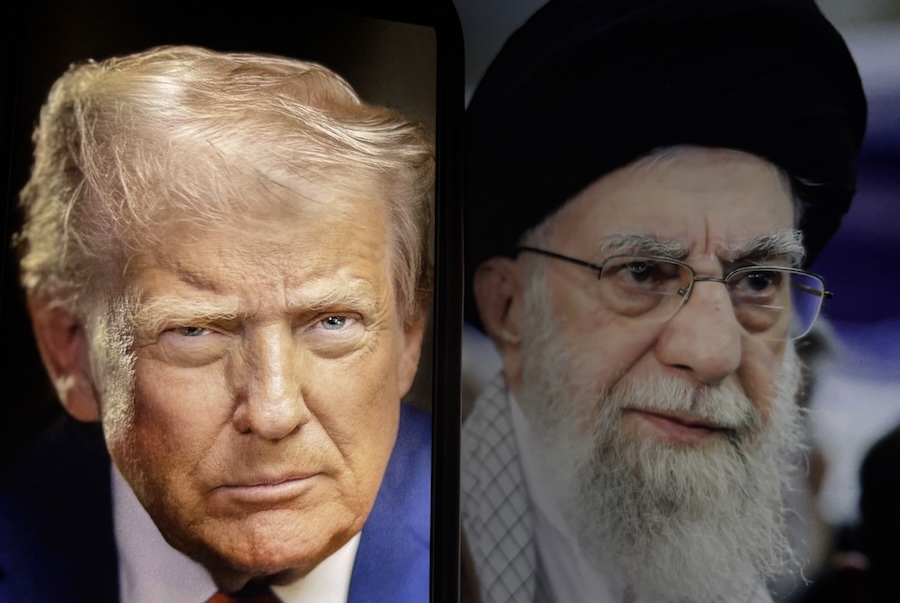
The United States may be closer to a direct military confrontation with Iran than many Americans realize, as President Donald Trump ramps up both diplomatic pressure and military force in a high-stakes standoff over Tehran’s nuclear program.
Discussions inside the administration are no longer focused on a limited, one-off strike. Instead, according to sources who spoke with Axios, officials are weighing plans for what could become a sustained, weeks-long military campaign against Iran — potentially conducted in close coordination with Israel.
Those briefed on the discussions say that any forthcoming operation would bear little resemblance to a limited strike. Instead, it would amount to a sustained military campaign, extending well beyond last June’s 12-day confrontation that began with Israeli action and culminated in American strikes on Iran’s underground nuclear facilities.
Unlike last year’s more contained exchange, the contemplated campaign would be broader in scope and more aggressive in execution, posing a sharper threat to the durability of Iran’s governing system. The possibility of escalation comes as American and Iranian officials concluded a second round of nuclear talks on Tuesday in Geneva. The American delegation, led by Steve Witkoff and Jared Kushner, met for roughly three hours with Iran’s foreign minister, Abbas Araghchi.
Both sides described the discussions as constructive and said incremental progress had been made. Yet officials acknowledged that significant gaps remain, particularly over uranium enrichment levels and the mechanisms for international verification.
Vice President JD Vance said the talks “went well” in certain respects, while underscoring that President Trump has established firm red lines that Tehran has not accepted. He indicated that although the president prefers a diplomatic resolution, he may determine that negotiations have “reached their natural end.”

Iranian officials have signaled a willingness to continue talks but have resisted any arrangement that would require the complete abandonment of nuclear enrichment, a central American demand.
Even as diplomacy proceeds, the American military posture in the region has shifted markedly. Current deployments reportedly include two aircraft carriers, about a dozen warships, hundreds of fighter aircraft and advanced air defense systems. In recent weeks, more than 150 military cargo flights have transported weapons and munitions into the Middle East.
Within the past day alone, roughly 50 additional fighter jets — including F-35s, F-22s and F-16s — have been dispatched, according to officials familiar with the movements.
The scale of the buildup has prompted speculation among analysts and former officials that the administration may be preparing for a more expansive operation rather than a single, limited strike. Some officials have suggested that any campaign could extend beyond nuclear facilities to include missile infrastructure and other strategic sites.
Israeli officials, according to multiple reports, are preparing for the possibility of military action in the near term. Israeli leaders have long argued that Iran’s nuclear and missile programs constitute an existential threat, and some have advocated for a broader effort to significantly degrade Iran’s capabilities.
Within the American government, views on timing appear to differ. Some officials believe any strikes could still be weeks away, contingent on the trajectory of negotiations. Others contend that the window could narrow quickly if talks stall.
“The boss is getting fed up. Some people around him warn him against going to war with Iran, but I think there is 90% chance we see kinetic action in the next few weeks,” a Trump adviser told Axios.
A major conflict with Iran would rank among the most consequential American military engagements in the Middle East in more than a decade and could shape the remainder of President Trump’s term.
Earlier this year, the president came close to authorizing strikes following reports of internal unrest and violence inside Iran. He ultimately chose to delay, coupling renewed negotiations with a conspicuous show of force.
Negotiators have set a two-week window for Iran to return with a more detailed proposal. Whether that timeline produces diplomatic progress remains unclear. There is no sign of an imminent agreement. At the same time, preparations for a military alternative appear to be intensifying.
