
Politics
WATCH: Tehran Skyline Engulfed In Smoke After U.S.-Israeli Strikes On Iranian Oil Facilities
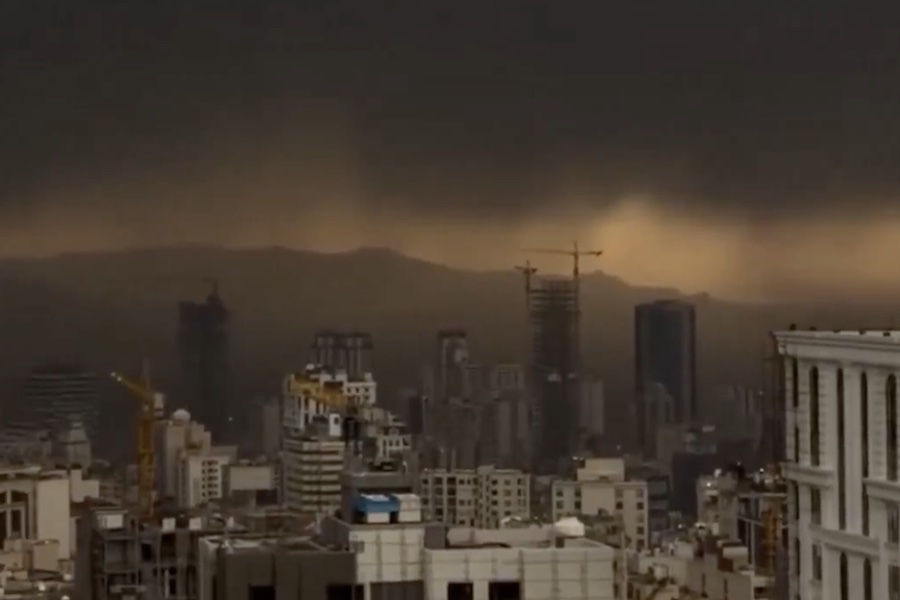
Apocalyptic video footage continues to trickle out of the Iranian capital of Tehran after U.S. and Israeli forces targeted Iranian oil facilities for the first time on Saturday morning.
Saturday’s strikes largely targeted Iranian oil infrastructure, with attacks focused primarily on storage and refining sites in and around Tehran, as well as nearby areas in Alborz province. Footage from the ground indicates that a number of vital oil facilities were hit, including four oil storage depots and one petroleum products transport or production transfer center.
Targeted facilities include the Shahran oil depot, located in northwest Tehran, which experienced significant fires and sent thick black smoke plumes over the city. The Aghdasieh oil warehouse in the city’s northeast was also struck, while the Tehran refinery was also hit by airstrikes, according to a report from CNN.
At least one oil depot in Karaj city was also hit.
Fires continue to burn into the morning at the Shahran Oil Depot in Northern Tehran, following overnight strikes by Israel. pic.twitter.com/sji0JkF3kg
— OSINTdefender (@sentdefender) March 8, 2026
Israeli officials stated that the targeted facilities supported Iran’s military operations, including fuel supply for armed forces activities and potentially missile-related infrastructure. Iranian state media and officials confirmed the attacks occurred overnight, describing them as carried out by “enemy aircraft” from the U.S. and Israel.
The extent of the damage included large fires that produced massive orange flames visible across Tehran, leading to thick black smoke blanketing the capital by Sunday morning. Dramatic footage from the city shows the Tehran skyline completely engulfed in smoke, while civilian vehicles were covered in smoke due to the burning oil facilities.
In some cases, oil managed to leak into surrounding sewer systems, which ultimately ignited and set multiple Tehran city blocks on fire.
Fires were eventually reported as contained in some areas, though smoke persisted, causing “black rain” contaminated with oil particles and prompting warnings from the Iranian Red Crescent about polluted air and hazardous conditions. Residents were advised to wear masks outdoors due to toxic pollutants.
Iranian State Media conceded that the strikes interrupted supply chains for the nation’s most populous areas. Major crude oil production facilities — primarily located in oil fields along the Persian Gulf — do not appear to have been targeted in Saturday’s strikes.
Insane video appears to show the moment last night that storm drains across the Iranian capital of Tehran exploded and burst into flames, as a result of runoff from the Shahran Oil Depot and other oil infrastructure across Northern Tehran, which were targeted earlier in the… pic.twitter.com/armEJxjGrS
— OSINTdefender (@sentdefender) March 8, 2026
Oil production remains a vital component of Iran’s economic stability, serving as the main source of government revenue through exports and domestic use. Despite long-standing sanctions, oil sales provide essential funds for public services, subsidies, imports, and state expenditures.
Annual export revenues have ranged from $30-35 billion in recent periods under constrained conditions, and fund upwards of 60 percent of the Iranian regime’s security budget.
China purchases the overwhelming majority of Iranian oil, with Beijing accounting for upwards of 90 percent of exports. Smaller volumes go to destinations like Syria, with some oil transshipped through intermediaries in the UAE, Malaysia, or Indonesia to obscure origins and circumvent restrictions.
RELATED: Pentagon Releases Footage Of Strike On Massive Iranian Drone Carrier
