
Politics
WATCH: Trump Lays Out Timetable For Iran Conflict, Explains Next Steps
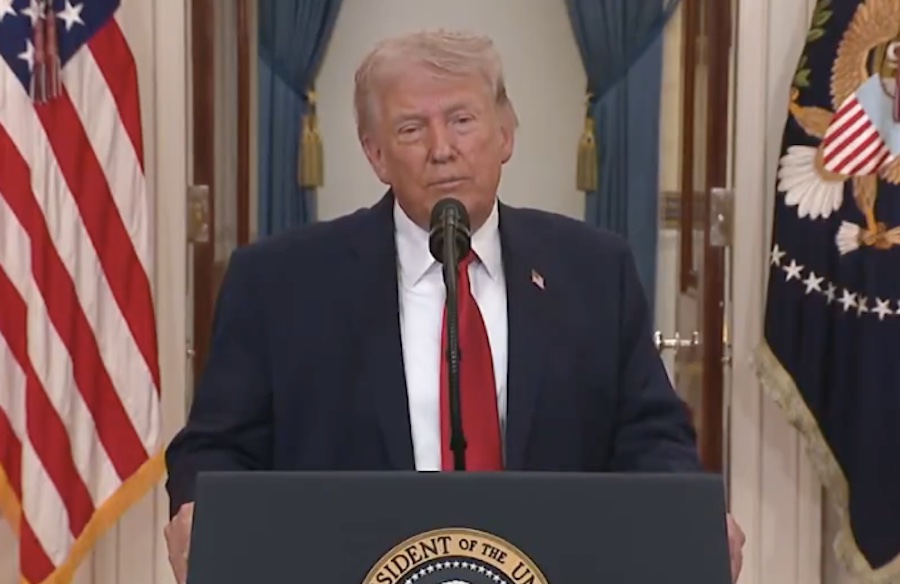
President Donald Trump explained his timetable for winding down the conflict with Iran, gave instructions to allies on potential next steps, and laid out U.S. objectives over the next several weeks.
After going over the military objectives that had already been hit, Trump turned his attention to the Strait of Hormuz, a narrow waterway connecting the Persian Gulf to the Gulf of Oman and the Arabian Sea. It serves as the primary maritime route for oil and natural gas flowing through the Gulf, which includes some of the world’s largest oil exporters.
Approximately 20 million barrels of oil and petroleum products transited the strait daily prior to the eruption of hostilities, accounting for roughly 20 percent of global seaborne oil trade, along with significant volumes of LNG.
The president stated that the United States had no ongoing need to maintain a presence tied to Middle Eastern oil resources. “We’re now totally independent of the Middle East, and yet we are there to help. We don’t have to be there. We don’t need their oil. We don’t need anything they have,” he said.
He added that U.S. involvement was oriented toward supporting allies, but responsibility for key regional assets now shifted elsewhere. Specifically addressing the Strait of Hormuz, Trump indicated that nations dependent on the waterway for oil shipments should assume leadership.
These allies, Trump argued, should work up “delayed courage” in order to open the strait themselves. Trump stated that Iran’s military capabilities were successfully degraded to the point where they could simply “take it” and control the vital waterway.
The president later outlined a clear timetable for the remainder of the operation. He described U.S. military objectives as “nearing completion” and indicated that the current phase of intensified activity would span the next two to three weeks.
“Over the next two to three weeks, we’re going to bring them back to the Stone Ages, where they belong,” Trump declared.
Trump characterized the overall campaign, referred to as Operation Epic Fury, as having achieved “swift, decisive, overwhelming victories” in its first month and noted that the United States was “getting very close” to finishing the job. He placed the current 32-day duration of U.S. involvement in perspective by comparing it to longer historical conflicts, including World War I, World War II, Korea, Vietnam, and Iraq, to underscore that the timeline remained relatively short.
Looking ahead, Trump detailed U.S. plans for the immediate future. Operations would maintain a high tempo of strikes aimed at remaining Iranian capabilities. He indicated that the United States would continue targeting missile production, naval assets, and related infrastructure.
He reiterated that Iran’s original leadership had been removed and that current Iranian representatives appeared “less radical and much more reasonable,” opening the door to discussions facilitated through intermediaries. However, he made clear that U.S. forces would remain engaged as needed until objectives were fully secured, after which withdrawal would follow.
All in all, Trump spoke for roughly 19 minutes in what was his first national address since the conflict began on February 28. “The world is watching, and when we do, when it’s all over, the United States will be safer, stronger, more prosperous, and greater than it has ever been before,” the president said.
“May God bless the men and women of the United States Armed Forces, and may God bless the United States of America. Thank you very much and good night.”
RELATED: U.S. Ally Pushes For Military Alliance To Open Hormuz Strait
