
Politics
JUST IN: Huge Explosion Rocks NYC, Building Partially Collapses
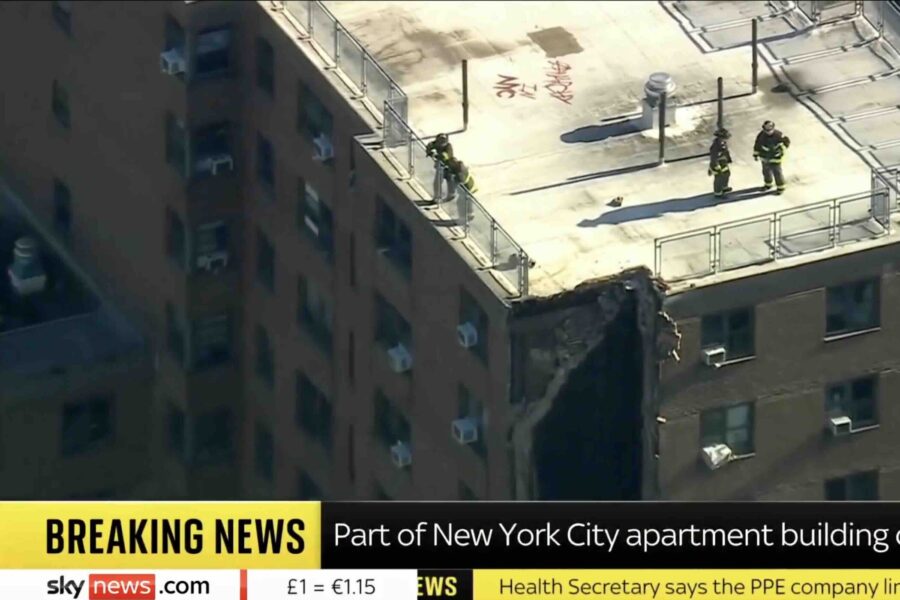
A towering apartment building in New York partially collapsed on Tuesday morning following a huge explosion that rocked parts of the Bronx borough.
The incident occurred at approximately 8:10 a.m. and affected a 20-story public housing complex, according to photographs from the scene showing an entire side of the facade stripped away and laying bare the occupants inside. Emergency workers responded to the Mott Haven neighborhood where they located an incinerator shaft that had collapsed.
No injuries have been reported at 505 Alexandria Ave., an apartment building in the Mitchel Houses development maintained by the city’s public housing division. About 3,462 people live in the Mitchel Houses, which was built in 1966.
“Early reports are of an explosion in a building chimney,” Barbara Brancaccio, an authority spokeswoman, said in a statement to the NYT. “Fortunately, no injuries have been reported, and an investigation is underway to determine the cause.”
First responders with the city’s fire department also confirmed that calls came in suggesting some type of gas explosion had occurred.
During the mid-20th Century, New York apartment buildings were constructed with incinerator shafts, allowing residents to burn their trash on site. Legislation was passed in 1989 banning the city’s further construction of apartment incinerators, and by 1999 the final municipal incinerator was shut down.
Since then, existing incinerator shafts have been allowed for use as trash chutes. It’s unclear if the building’s incinerator was still active at the time of the explosion.
Mayor Eric Adams said he has been briefed on the incident and asked New Yorkers to stay away from the area while residents are cared for.
“Please avoid the area for your safety,” he wrote on X.
WATCH:
No violations have been reported at the public housing complex, according to the NYT. Inspectors with the Department of Buildings have also arrived on scene to assess the damage and determine the cause of the explosion.
Approximately half a million city residents reside in public housing managed by the New York City Housing Authority, the largest of its kind in the nation. Tenants in the system have repeatedly battled with municipal services over how to address mold, rodents, and heat and water outages during the winter months.
Many of the city’s large public housing complexes date back to the 40s, 50s, and 60s as New York grappled with accommodating a swell of new immigrants during and after World War II. Persistent strains on the municipal budget, including the city’s infamous fiscal crisis of the 1970s, have challenged the Big Apple’s ability to serve its neediest.
