
Politics
NEW: US Takes Major Step Toward Re-Opening Strait Of Hormuz
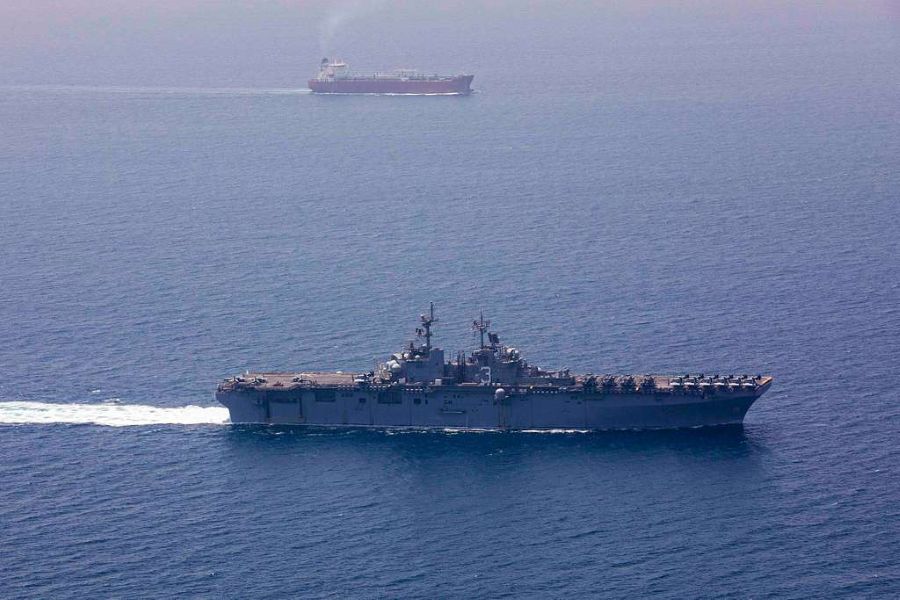
Treasury Secretary Scott Bessent says the U.S. is taking a key step toward re-opening the Strait of Hormuz by allowing Iranian oil tankers to keep moving through the choke point, even as Tehran’s attacks have slammed commercial shipping and jolted global energy markets.
“The Iranian ships have been getting out already, and we’ve let that happen to supply the rest of the world,” Bessent told CNBC’s Brian Sullivan during a Monday “Squawk Box” interview in Paris. Bessent is in France for trade talks with China.
Tanker traffic through the strait has plunged as Iran targets commercial vessels in the Persian Gulf. Still, Iran has continued exporting millions of barrels through the narrow route, despite a heavy U.S. Navy presence in the region. Iran exports about 1.5 million barrels per day, according to the report.
Bessent said the Trump administration expects traffic to pick up before U.S. naval escorts and allied forces begin actively shepherding commercial ships through the corridor. He said tankers supplying India have been transiting the strait, and the U.S. believes some Chinese ships are also getting out of the gulf.
“We think that there will be a natural opening that the Iranians are letting out, and for now we’re fine with that. We want the world to be well supplied,” Bessent said.
RELATED: BREAKING: Iran Attacks Oil Tanker Near Strait Of Hormuz, Sparking Global Oil Fears
The message lines up with President Donald Trump’s push to pressure countries that rely on Hormuz to step up and help protect shipping, rather than leaving the U.S. to shoulder the burden alone while Iran plays pirate with global trade lanes.
The Strait of Hormuz, which links the Persian Gulf to global markets, is the world’s most important oil transit route. Roughly 20% of global oil supplies passed through the waterway before the war. When the strait gets squeezed, American families feel it fast at the pump, and the rest of the world feels it in supply shocks and price spikes.
RELATED: Iran Strikes 3 Ships Near Strait Of Hormuz
Oil prices have surged about 40% since the U.S. and Israel struck Iran two weeks ago. The disruption has fueled claims of the largest oil supply hit on record, with the International Energy Agency cited as warning that exports through the strait have sharply collapsed.
Brent crude, the international benchmark, hovered around $102 a barrel Monday, while U.S. crude traded near $95.
Bessent said prices should eventually come down sharply once the conflict ends. The Treasury secretary said oil should fall “much lower” than $80 per barrel after the war is over, adding that he doesn’t know when the fighting will stop but “the world will be safer and we will be better supplied.”
He also rejected market chatter that the administration might step into oil futures trading.
“We haven’t done that,” Bessent said.
Download the FREE Trending Politics App to get the latest news FIRST >>
