
Politics
Russia Unleashes Massive Drone Barrage As Signs Point To New Spring Offensive
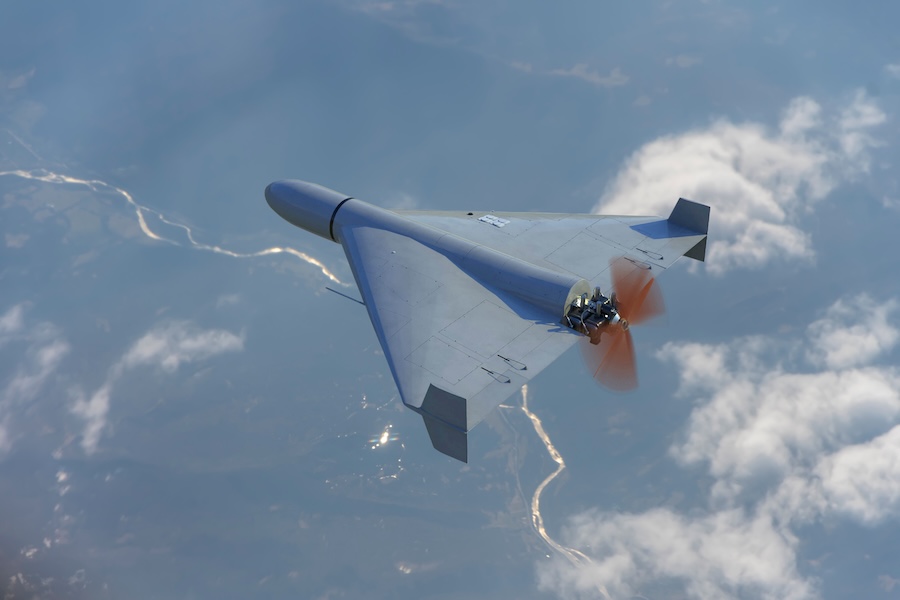
Russia launched one of its most aggressive aerial assaults of the war Tuesday night, firing nearly 400 drones at Ukraine in a sweeping overnight attack that officials say could signal the start of a spring offensive.
Ukrainian authorities said the coordinated barrage involved hundreds of long-range drones—many believed to be Iranian-designed Shahed systems—alongside cruise and ballistic missiles targeting cities across the country. At least six people were killed and dozens more injured, with damage reported in major urban centers including Kyiv, Lviv, Dnipro, and Ivano-Frankivsk.
What set this attack apart was its sheer scale. Ukraine’s air force described the strike as one of the largest single-wave drone assaults in recent months, with the volume alone designed to strain and overwhelm air defense systems. In some areas, the assault extended into daylight hours, forcing Ukrainian defenses to remain engaged far longer than usual.
Ukrainian officials report that Russia has launched close to 1,000 drones over several days in successive waves, suggesting a deliberate strategy focused on saturation rather than precision. By flooding the skies with unmanned systems, Russian forces appear to be testing the limits of Ukraine’s air defenses while inflicting widespread disruption.
Military analysts and Ukrainian leadership believe the attacks are closely tied to a larger shift on the battlefield. Commander-in-Chief Oleksandr Syrskyi has pointed to intensified ground operations along a roughly 1,250-kilometer front line, with heavy fighting concentrated in regions like Donetsk and Zaporizhzhia. The renewed aerial campaign appears to be working in tandem with these ground assaults.
There are also indications that Russia is adjusting its tactics. After months of relying heavily on small infantry units for incremental gains, Russian forces are reportedly reintroducing armored formations, including tanks and mechanized units. The shift suggests a move toward more coordinated, combined-arms operations aimed at breaking through entrenched Ukrainian positions.
Drone warfare remains central to this evolving strategy. Russia has invested heavily in expanding its unmanned capabilities, even establishing a dedicated Unmanned Systems Forces branch in late 2025. These units are designed to deploy large numbers of relatively low-cost drones at high frequency, allowing sustained pressure without the same level of risk to personnel.
The drones serve multiple purposes beyond direct strikes. They are used to exhaust Ukrainian defenses, force constant nationwide alerts, and disrupt critical infrastructure. Recent attacks have hit energy facilities, transportation networks, and civilian areas, underscoring the wide scope of targeting.
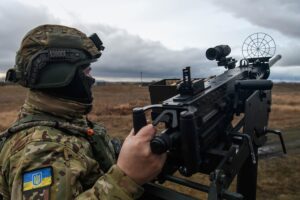
An air defense unit of the Ukrainian Armed Forces, called drone hunters, at position in Kyiv region of Ukraine, March 24, 2024
The escalation has also raised concerns beyond Ukraine’s borders. During the latest barrage, neighboring NATO countries were placed on heightened alert, with Poland scrambling fighter jets as Russian drones approached alliance airspace. While there is no indication of deliberate targeting outside Ukraine, the proximity of the attacks highlights the risk of unintended spillover.
For Ukraine, the strain is growing. President Volodymyr Zelenskyy has renewed appeals for additional Western air defense systems, warning that sustained attacks at this scale could stretch the country’s defensive capabilities. The challenge is not only protecting major cities but also ensuring sufficient coverage for front-line troops and vital infrastructure.
Despite the pressure, Ukrainian forces have managed to intercept a significant number of incoming drones and continue to hold key positions along the front. Ukrainian units have also carried out their own drone strikes deep into Russian territory, signaling that the fight remains active on both sides.
Still, the latest wave of attacks marks a notable shift in momentum. The combination of large-scale drone barrages, intensified ground operations, and evolving tactics suggests Russia is entering a new phase of the war—one defined by sustained pressure and an apparent push to regain the initiative as the spring fighting season begins.
