
Politics
GOP Rep. Calls For Removal Of John Thune
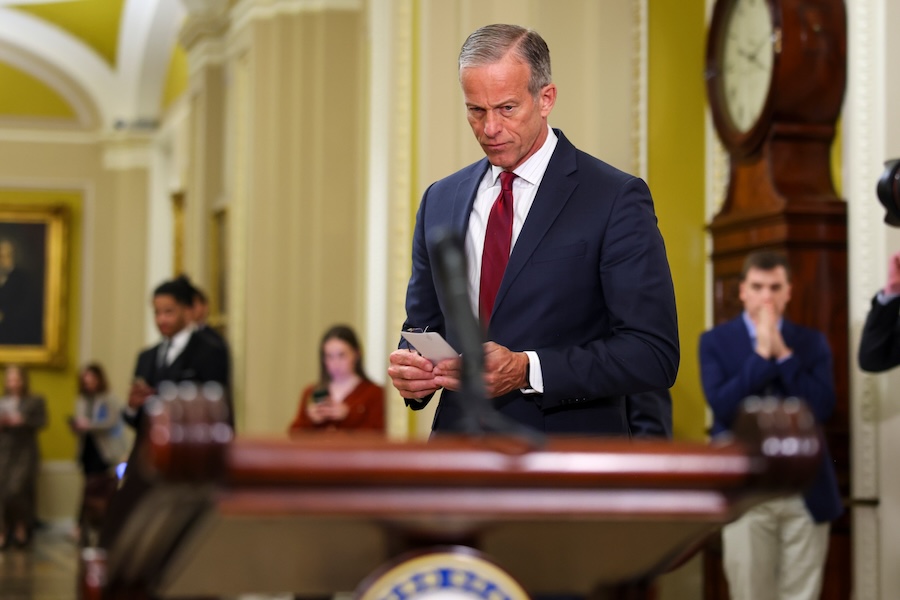
A growing divide within the Republican Party spilled into public view Friday after Tennessee Rep. John Rose (R-TN) called for Senate Majority Leader John Thune (R-SD) to step aside from leadership, following a controversial deal to end the Department of Homeland Security shutdown.
“We should call on Thune to step aside,” Rose said in an interview, marking one of the most direct challenges yet to Republican leadership amid frustration from conservative lawmakers. Thune became Senate Majority Leader in January 2025.
The dispute comes after the Senate voted overnight to reopen much of DHS following a 42-day standoff that disrupted airport security operations and left thousands of federal workers without pay. The funding package restores operations for agencies like TSA, FEMA, and the Coast Guard, but notably excludes new funding for Immigration and Customs Enforcement and Border Patrol—two priorities that have been central to Republican messaging on border security.
JUST IN: 🚨🚨 We now have a sitting member of Congress officially calling on Majority Leader John Thune to be removed from power.
“We should call on Thune to step aside,” @RepJohnRose tells Todd Starnes.
— toddstarnes (@toddstarnes) March 27, 2026
Rose blasted the deal in a statement, accusing Senate Republicans of giving Democrats a political victory while avoiding a tougher fight over immigration enforcement.
“And just like that, while Americans were asleep, Senate Republicans were wide awake tossing the radical Democrats a political lifeline,” Rose wrote. He added that lawmakers were now leaving Washington for recess without addressing the SAVE America Act or securing full ICE funding.
The Tennessee Republican also argued that the agreement allows lawmakers to sidestep politically difficult votes, particularly on border enforcement, which has remained a flashpoint issue heading into the next election cycle.
Thune, however, defended the deal and shifted blame squarely onto Democrats, arguing they prolonged the shutdown and refused to negotiate in good faith.
“After holding DHS and the American people hostage for over 40 days, Dems got zero restrictions that would prevent ICE and CBP agents from doing their jobs safely,” Thune said in a statement. He also pointed to future plans to increase funding through budget reconciliation, signaling that Republicans intend to revisit the issue.

WASHINGTON — February 11 2025: Senate Majority Leader John Thune (R-SD) speaks to reporters after the weekly Senate policy luncheon at the U.S. Capitol.
Senate Democrats, led by Minority Leader Chuck Schumer (D-NY), took a different view, celebrating the outcome as a win against what they described as aggressive immigration enforcement policies under the Trump administration.
“Senate Democrats stood united — no wavering, no backing down. We held the line,” Schumer said on the Senate floor, defending the decision to block additional ICE funding without reforms.
The partial shutdown had begun to take a visible toll across the country, particularly at airports during the busy spring break travel season. TSA staffing shortages reached critical levels, with some locations reporting absentee rates as high as 40 percent. More than 480 TSA officers reportedly quit during the shutdown, raising concerns about long-term impacts on national security.
Amid mounting pressure, President Trump moved to intervene, announcing plans to declare a national emergency to ensure TSA agents were paid. The proposal raised legal and logistical questions but added urgency to negotiations that ultimately led to the Senate agreement.
Still, the final deal has left many conservatives dissatisfied, arguing that it prioritizes visible government functions like airport security while delaying action on immigration enforcement.
House Speaker Mike Johnson has already criticized the approach as “shameful,” and it remains unclear whether the House will accept the Senate’s proposal or push for changes that include full DHS funding.
With Congress now heading into a two-week recess, the battle over immigration funding is far from resolved. Republicans are expected to attempt to secure ICE funding through reconciliation, potentially tying it to broader legislation such as the SAVE America Act.
