
Politics
JUST IN: Trump Issues Major Update On Iran
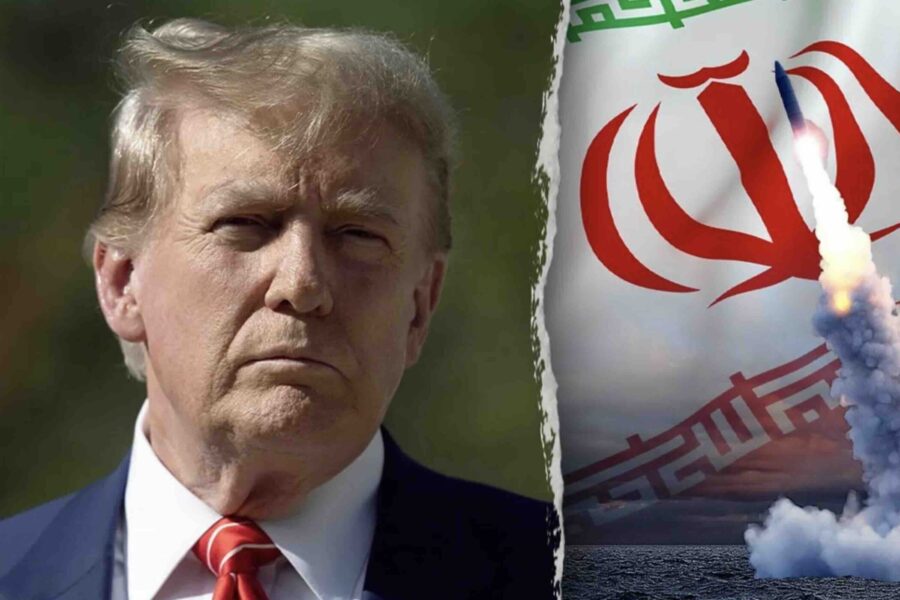
President Donald Trump said Friday that Iran has asked to continue talks with the United States, even as he declared the June ceasefire dead after another dangerous flare-up in the Persian Gulf.
The president’s update came after three Qatari and Saudi commercial tankers came under fire this week, triggering U.S. strikes on Iranian sites and Iranian attacks on American military installations in neighboring Gulf states.
No new attacks were reported Friday, but tanker traffic through the Strait of Hormuz slowed as the latest violence rattled energy markets and put the fragile truce on life support.
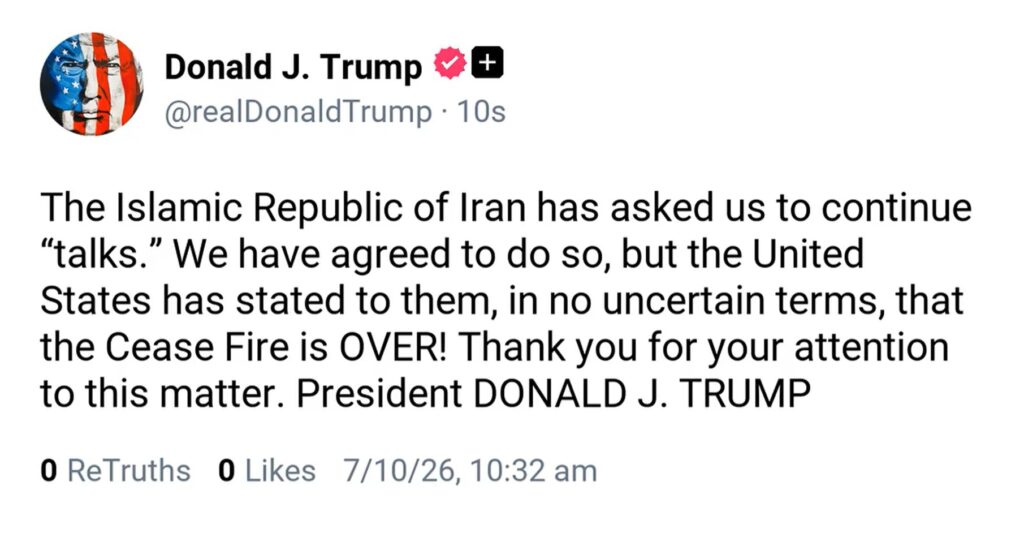
“The Islamic Republic of Iran has asked us to continue ‘talks.’ We have agreed to do so, but the United States has stated to them, in no uncertain terms, that the Cease Fire is OVER!” he wrote in a post on Truth Social.
The U.S. and Iran reached an interim deal last month to pause a four-month war that has killed thousands and choked global energy supplies.
But this week’s exchange of fire exposed just how fragile that agreement has become.
Qatari negotiators were meeting with officials in Iran on Friday to try to cool tensions and discuss navigation through the Strait of Hormuz, a source with knowledge of the situation told Reuters.
The talks are aimed at addressing implementation of the U.S.-Iran memorandum of understanding and the disputes that triggered the latest escalation, including fights over navigation in the strait.
Iran’s semi-official Tasnim news agency said a Qatari delegation visited Iran as Doha seeks to strengthen its role as a mediator.
Oil prices eased Friday but remained on pace for weekly gains of 5% after the hostilities.
The Strait of Hormuz handled about one-fifth of global oil supplies before the war.
Since then, Tehran has largely taken control of the critical waterway, forcing a stalemate in its confrontation with the world’s most powerful military.
Under the interim deal, the U.S. ended its naval blockade of Iranian ports, while Iran agreed to ensure safe passage for commercial vessels.
That arrangement is now hanging by a thread.
Washington this week accused Iranian forces of attacking three tankers in the area and struck military sites in Iran in response.
Iran has not claimed responsibility for those attacks, but analysts say Tehran often uses pressure on shipping to gain leverage at the negotiating table.
Iran then attacked U.S. military sites in Gulf states on Thursday.
RELATED: NEW: Iran Struggling To Fight Back As US Military Pounds Persian Nation
The U.S. said its response was aimed at keeping the strait open and made clear that Iran does not control the waterway.
Tehran warned that the strait would only reopen on its terms and that any U.S. intervention would draw a “crushing response”.
The U.N. shipping agency’s governing council on Friday condemned Iran’s efforts to impose sovereignty over the Strait of Hormuz and Tehran’s “unilateral decision” to create a body to control traffic through it.
Before this week’s attacks, daily tanker traffic had climbed to its highest level since the war began, averaging 40 ships through the strait.
That was still well below the prewar average of 125 to 140 daily sailings.
RELATED: NEW: Plot To Assassinate Trump Exposed
The renewed tensions came as Iran buried slain Supreme Leader Ayatollah Ali Khamenei at the country’s holiest shrine in Mashhad after a week of funeral processions and rallies.
Khamenei was killed in an airstrike on the first day of the war on Feb. 28.
A condolence ceremony was set for Friday after sunset prayers on behalf of Supreme Leader Mojtaba Khamenei for his father in Qom, his office announced.
Mojtaba Khamenei, who was injured in the strike that killed his father, has still not appeared in public.
His whereabouts remain a mystery to Iranians and the rest of the world as the Islamic Republic faces one of the most unstable moments in its 47-year history.
Donald Trump’s inability to fully end the war has frustrated the president as Republicans head toward midterm elections later this year with gas prices and voter anger still looming large.
For now, the White House is keeping diplomacy alive while making clear the old ceasefire is gone.
Iran wants to keep talking. Trump says the U.S. will listen, but not pretend the regime’s attacks can be swept under the rug.
POLL: Will You Support Trump And His Candidates In The Midterms?
