
Politics
NEW: Iran Struggling To Fight Back As US Military Pounds Persian Nation
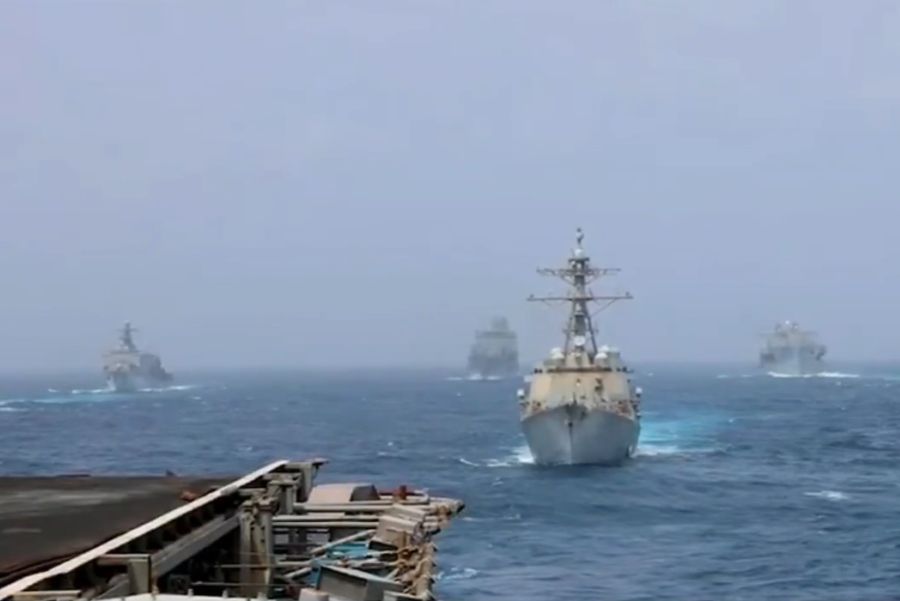
The United States and Iran traded some of their heaviest fire since last month’s ceasefire agreement, but the latest round of fighting has exposed just how badly Tehran is struggling to match American firepower.
U.S. forces have landed most of the blows in the latest volley, pounding roughly 170 targets over two days while Iran’s retaliatory strikes on U.S.-linked bases in the Middle East were limited and largely intercepted by air defenses.
The U.S. military said its strikes targeted Iranian military infrastructure tied to Tehran’s attacks on commercial shipping in the Strait of Hormuz.
Iran, meanwhile, launched missiles and drones at military targets in several Gulf countries, including Jordan, Kuwait, Bahrain and Qatar.
Hossein Kermanpour, a spokesman for Iran’s Health Ministry, said on social media Thursday that U.S. airstrikes across five provinces killed 14 people and injured 78.
No deaths have been reported from Iran’s latest strikes, which Tehran said were retaliation for American attacks.
The lopsided exchange underscores Iran’s weakened military position after months of fighting, degraded air defenses and limited ability to hit back at the world’s most powerful military.
But Tehran has still found one way to cause pain: threatening the global economy by squeezing shipping through the Strait of Hormuz.
The narrow waterway remains one of the world’s most important energy routes, and Iran’s ability to menace ships there gives the regime leverage even as American bombs hammer its military infrastructure.
U.S. Central Command said American forces struck targets across Iran, including military assets in port cities, in an effort to degrade Iran’s ability to attack commercial vessels in the strait.
🚨 JUST IN: The Pentagon releases videos of American forces OBLITERATING over 90 TARGETS in Iran tonight in retaliation for the regime’s attacks on civilian vessels
This is in ADDITION to the 80 targets hit last night by U.S. forces.
Tonight’s strikes included “air defense… pic.twitter.com/DV9xVQbYDd
— Nick Sortor (@nicksortor) July 9, 2026
Online video verified by The New York Times showed damage to a railway bridge near the Iranian city of Agh Qala.
Iranian officials also said U.S. forces struck another railway line connecting Tehran to the northeastern city of Mashhad.
In Jordan, Iran’s military said its ballistic missiles targeted Muwaffaq Salti Air Base, a Jordanian facility also used by U.S. forces.
Jordan’s military said it intercepted eight missiles in its airspace and that they caused no material damage.
In Kuwait, Iranian state media said Iran’s armed forces targeted military bases.
RELATED: BREAKING: US Clobbers Iran With New Strikes
Kuwait said it intercepted three ballistic missiles, a cruise missile and 10 drones early Thursday.
Officials said falling debris injured one person and caused material damage.
In Bahrain, the country’s military said it intercepted and destroyed several drones and missiles after Iran launched attacks Thursday.
Iran also said it attacked Qatar, a key mediator in talks between Tehran and Washington.
RELATED: JUST IN: Trump Declares Iran Ceasefire ‘Over’ After Massive Barrage Of Strikes
Qatari authorities did not confirm any strikes, but they issued a public security alert early Thursday morning before later lifting it.
The Iranian attacks on Gulf Arab countries caused limited destruction, but they still carry serious consequences.
For countries that sell themselves as safe havens for business, tourism and energy investment, even intercepted missiles can rattle confidence.
The war has already shaken the region’s sense of security, hit energy-dependent economies and forced some governments to rethink their defense strategies.
