
Politics
Newsom Signs ‘Stop Nick Shirley Act’ Aimed At Stopping Documentation Of Fraud
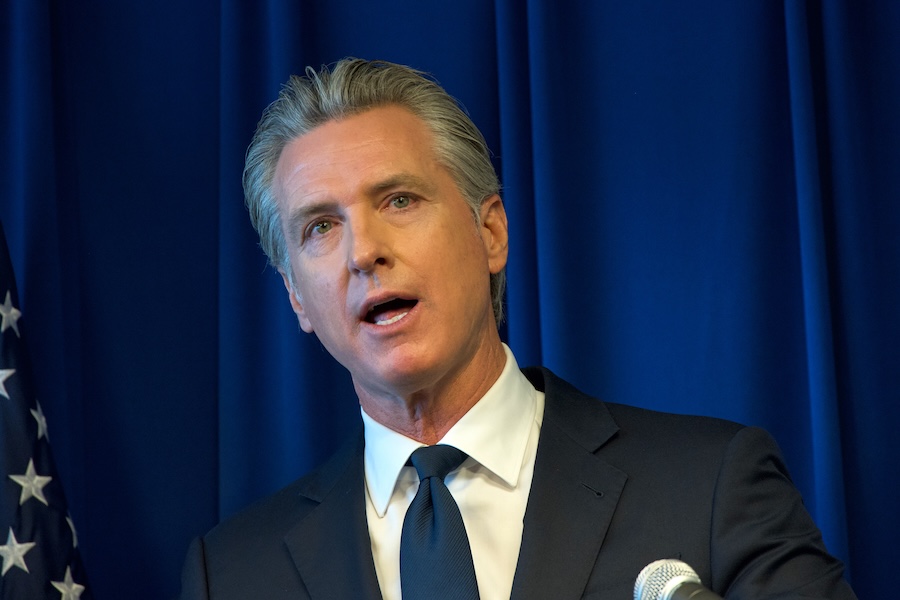
California Governor Gavin Newsom on Saturday signed a controversial bill, officially titled “Privacy for immigration support services providers,” which expands the state’s current “Safe at Home” program. Critics have argued that the bill prevents journalists, such as the viral fraud reporting released by independent journalist Nick Shirley.
The legislation builds on the Safe at Home program, which has operated since 1999. That program allows eligible individuals — including survivors of domestic violence, sexual assault, stalking, human trafficking, elder abuse and certain “health care workers” providing abortions or sex change procedures — to use a substitute mailing address administered by the California Secretary of State. Government agencies generally accept this address in place of a residential address in public records, which shields eligible individuals from threats, the state claims.
Under the new law, eligibility extends to designated immigration support services providers, their employees, and volunteers at nonprofit organizations, community legal clinics, law offices, and health facilities who face “threats, harassment, or violence” linked to their work. Applicants must register with the state and document a relevant threat or incident within the prior year.
The legislation also prohibits knowingly posting, selling, or sharing a participant’s personal information or image online with the specific intent to facilitate harassment, violence, credible threats, or to place the individual in reasonable fear for their safety.
When introducing the bill back in February, Assemblymember Mia Bonta made several references to viral reports on fraud without naming anyone directly. “Right now, our immigrant service providers are living in fear because of extremists looking to demonize the work that they do and the populations they serve. That is an intolerable consequence of the anti-immigrant rhetoric that exists right now,” she said.
Opponents, including DeMaio, argued during committee discussions and floor debates that the legislation could affect independent investigations of organizations receiving public funds. DeMaio coined the “Stop Nick Shirley Act” nickname in reference to independent journalist and YouTuber Nick Shirley, who has documented several instances of alleged fraud across a number of public services. Several of the entities documented in Shirley;s reports are run by immigrants from the third world.
POLL: Should Foreigners Be Banned From Buying American Farmland?
WTF‼️Nick Shirley just shared this new video of Somali daycare fraud in Minnesota – apparently this one venue gets $3,000,000! 🇺🇸🇺🇸🇺🇸 pic.twitter.com/Re4ZL52oma
— Suffragent (@Suffragent_) December 30, 2025
Critics have contended the bill’s provisions on posting images or personal information might create barriers or legal risks for documentation of potential misconduct, raising First Amendment concerns.
Shirley’s December 2025 video focused on daycare centers in Minneapolis, Minnesota, that received funding through the state’s Child Care Assistance Program (CCAP). He visited multiple facilities, including the Quality Learning Center (whose exterior sign misspelled “Learning” as “Learing”), and found few or no children present during daytime hours despite licensing for significant capacity and substantial public payments.
Shirley and sources associated with the video cited figures indicating tens of millions of dollars in funding across several centers since around fiscal year 2020. One facility, Quality Learning Center, later closed its license in early January 2026 after requesting closure, while others have since been charged.
In California, Shirley released videos in early 2026 examining hospice and daycare providers, alleging substantial improper billing under Medi-Cal and related programs. He highlighted clusters of licensed hospice entities at single addresses or office complexes in the Los Angeles area, some appearing sparsely occupied, and referenced data suggesting high per-beneficiary charges or limited visible activity.
Both state and federal authorities have pursued cases involving fraud in California’s public services, including in the hospice sector.
RELATED: FBI Arrests Most Wanted COVID Fraud Fugitive
