
Politics
NEW: Journalist Nick Shirley Fires Back After Lawmakers Target His Investigations
California has enacted a controversial new law that critics warn could be used to punish independent journalists who investigate taxpayer-funded immigrant nonprofits and nongovernmental organizations.
Democratic Gov. Gavin Newsom signed Assembly Bill 2624 into law last month following its approval by the state Legislature. Republican lawmakers dubbed the measure the “Stop Nick Shirley Act,” arguing that it was crafted in response to investigations conducted by independent journalist Nick Shirley. The law is scheduled to take effect on October 1, 2027.
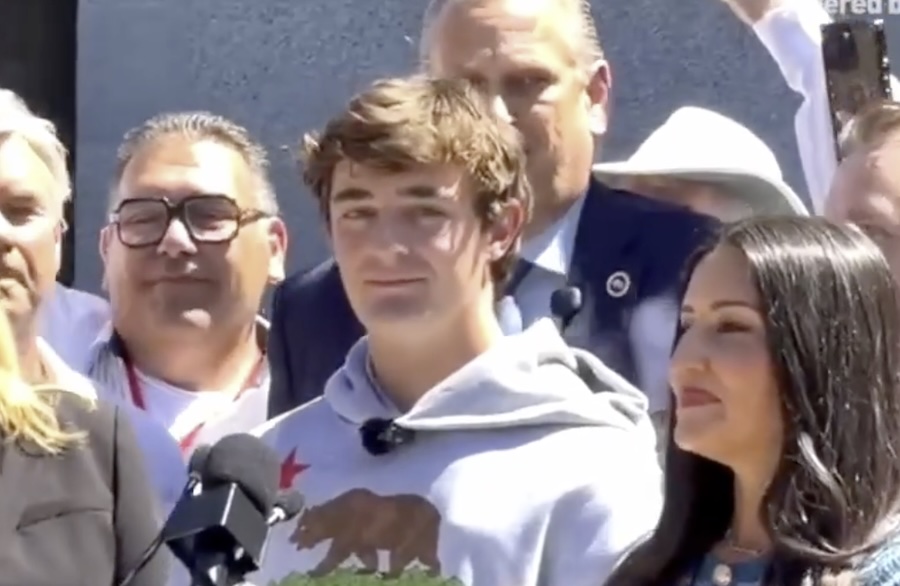
Shirley spoke out against the legislation during a rally outside the California State Capitol in Sacramento, where supporters gathered to defend investigative journalism and free speech. In an interview published by Frontlines TPUSA, Shirley accused state politicians of pursuing the people exposing suspected wrongdoing instead of investigating the alleged fraud itself.
“In California, the politicians, instead of going after the fraudsters, they’ve now gone after those that are going to expose the fraud,” Shirley said. “Now we want to prohibit people from being able to go and film these locations to expose it.”
WATCH:
NEW: CA lawmakers say Nick Shirley is a threat to immigrant non-profits and NGO’s.
So they passed a new law that could criminalize his investigative journalism.
But @nickshirleyy spoke to us one-on-one and says he’s the one facing death threats for shining a light on fraud,… pic.twitter.com/RXxVNpWURr
— FRONTLINES TPUSA (@FrontlinesTPUSA) August 27, 2026
The new law expands California’s Safe at Home Program to include employees and volunteers working for certain organizations that provide legal, medical or humanitarian services to immigrants. Eligible participants who demonstrate that they have faced credible threats can receive substitute mailing addresses and keep their home addresses out of public records.
The law also restricts publishing their personal information or images online when done with the specific intent of provoking imminent violence against them.
Supporters insist the legislation is narrowly designed to prevent doxxing and violence. Democratic Assemblywoman Mia Bonta, who authored the bill, said nonprofit workers and volunteers have been followed, filmed, harassed and threatened because of their employment.
“We heard directly from organizations whose staff and volunteers have been doxxed, harassed, followed and filmed at their workplaces and threatened, with that harassment sometimes reaching their families at home,” Bonta said during the final legislative vote. “These are not hypothetical concerns. No one should have to fear that doing their job will put their family at risk.”
Critics contend that the measure’s references to publishing images and personal information are dangerously broad and could discourage journalists from recording activity at publicly funded organizations. Violators could face criminal penalties under certain provisions and civil damages of up to $4,000.
The Foundation for Individual Rights and Expression has also warned that similar privacy statutes elsewhere have been invoked against journalists publishing newsworthy information. The Los Angeles Times reported that applicants must document a recent threat before receiving the law’s protections.
Shirley said his investigations have already placed his own safety at risk. He told Frontlines TPUSA that he has received death threats, had his home address circulated online and now travels with an armed security guard.
“Putting the location out on the internet of where I live, the people showing up to the house, just to the constant onslaught of death threats as well on my phone and whatnot, it did get pretty crazy,” he said.
Despite those threats and the new law, Shirley said he has no plans to stop investigating suspected waste, fraud and abuse involving taxpayer money. He hopes the legislation backfires by motivating more Americans to scrutinize government spending and demand answers from elected leaders.
“Now it’s time for people with common sense to actually rise up,” Shirley said. “There’s still so much more that needs to be exposed.”
