
Politics
EU Agrees To Open Membership Talks With Ukraine, Moldova
Ambassadors from 27 European Union member states agreed to open the first phase of accession negotiations with Ukraine and Moldova, marking a crucial first step towards membership for both nations. The formal step is scheduled for an intergovernmental conference on June 15, in Luxembourg, where the “Fundamentals” cluster of negotiating chapters will be opened.
This decision follows Ukraine’s application for EU membership on February 28, 2022, shortly after Russia’s full-scale invasion. Ukraine received candidate status on June 23, 2022, while the European Council decided to open accession negotiations on December 14, 2023. A first intergovernmental conference was held on June 25, 2024, and bilateral screening of the 35 negotiating chapters was completed in September 2025.
The Fundamentals cluster, also known as Cluster 1, forms the backbone of the accession process. It covers core areas including the rule of law, fundamental rights, the functioning of democratic institutions, public administration reform, and economic criteria.
It includes specific chapters such as Judiciary and Fundamental Rights, Justice, Freedom and Security, and Public Procurement. All 27 member states must agree to open and close each chapter or cluster.
“Today, the European Union took a major step forward. All member states agreed to open the first accession negotiations cluster with Ukraine and Moldova. At the first Intergovernmental Conference on Monday, we will open the cluster on fundamentals; the backbone of the accession process,” European Council President António Costa and European Commission President Ursula von der Leyen said in a joint statement.
“This is a recognition of the determination, courage and hard work shown by both countries in advancing reforms, even in the face of immense challenges. And a signal that the EU’s offer of peace, stability and opportunity is unmatchable. Enlargement is a strategic choice. By bringing our nations closer together, we strengthen peace, security and prosperity across our continent,” they continued. “In a world marked by growing uncertainty, a larger European Union is in our common interest. Enlargement remains one of the EU’s greatest success stories and our best investment in our shared future.”
Progress had been delayed by Hungary’s previous government, which had blocked advancement. A change in government in Budapest and a recent agreement addressing the rights of the Hungarian ethnic minority in Ukraine enabled consensus. Technical preparations, including draft common positions on clusters, had continued in parallel.
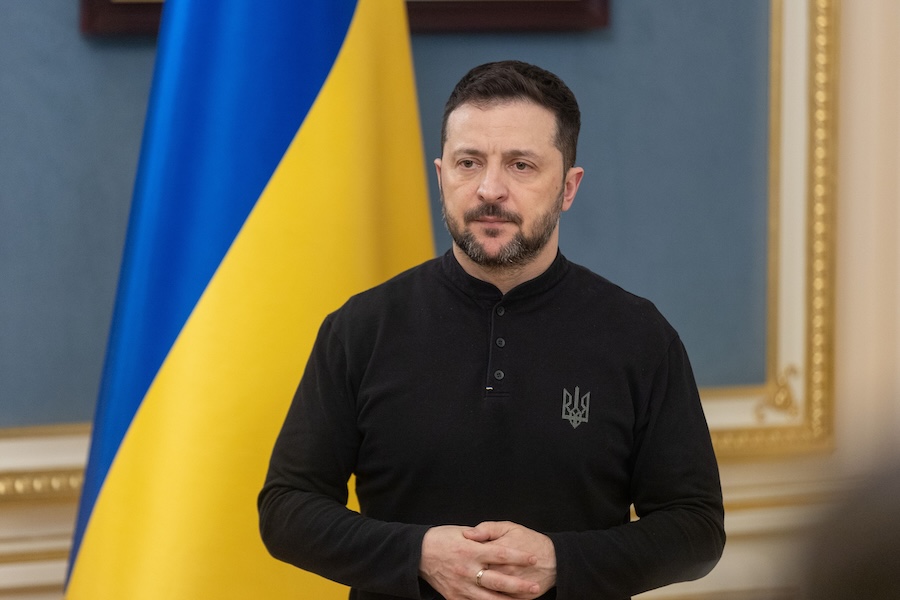
Ukrainian President Volodymyr Zelensky welcomed the decision as significant support. He stated that the opening of the first cluster represents “significant political and moral support for our state and our people,” noting that “Ukraine is defending itself and, in doing so, all of Europe – the idea that European nations can live united, free, and in peace.
The full accession process involves negotiations across six clusters covering all 35 chapters. It is merit-based, with no fixed timeline, and requires unanimous agreement at key stages. Ukraine has implemented reforms in wartime conditions, though challenges in areas such as anti-corruption measures and judicial standards persist, which have been noted in EU assessments.
Ukraine views eventual EU membership as a key element of long-term security and stability. Russia has not formally objected to Ukraine’s EU path, unlike its stance on NATO.
RELATED: Putin Hints At Significant Progress In Ukraine Peace Talks: ‘Coming To An End’
