
Politics
GOP Under Fire For ‘Giving’ Dems A Seat In Deep Red State
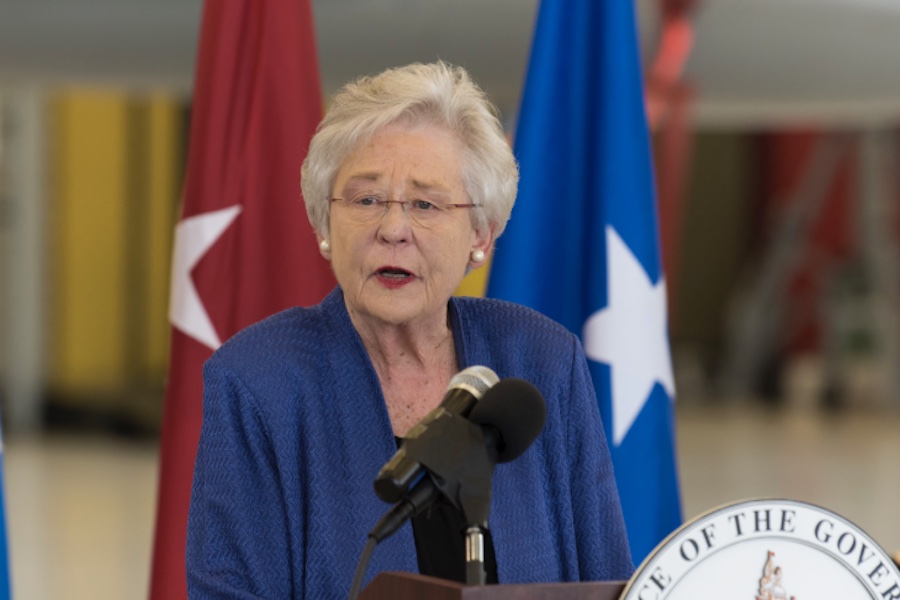
Alabama’s congressional redistricting has generated ongoing debate following the U.S. Supreme Court’s May 2026 order, which cleared the way for the state to implement its 2023 legislatively approved map.
The high court recently moved to vacate lower-court rulings that had blocked the map and directed further review in light of its recent decision in a Louisiana case that narrowed the application of Section 2 of the Voting Rights Act, which deals with the creation of drawing congressional districts on the basis of race. Alabama’s 2023 map includes only one district with a majority-black voting-age population, compared with the two such districts required by prior court orders after the 2023 Allen v. Milligan ruling, which blocked the map.
Under the updated framework, the state can now proceed with the 2023 boundaries for the 2026 midterm elections. Governor Kay Ivey promptly called a special primary election for August 11, 2026, in districts 1, 2, 6, and 7 to align with the 2023 lines, voiding certain earlier primary results and allowing candidates to run under the new configuration.
This map, originally drawn by the Republican-led legislature, maintains seven districts overall while concentrating black voters primarily in the Seventh District, which has historically elected Democrat Terri Sewell.
The new proposal effectively retains one Democrat-controlled seat intact in the Seventh District while positioning the remaining six districts as Republican-leaning. This structure stems directly from the 2023 map’s design, which lawmakers enacted before the Milligan decision mandated additional changes.
Implementation of this plan would shift Alabama’s U.S. House delegation from its current 5-Republican, 2-Democrat makeup to an expected 6-1 split.
Critics within the Republican Party, however, contend that even a single Democratic seat is unnecessary in a state with such pronounced partisan preferences, pointing to opportunities for further adjustments that could produce a 7-0 Republican outcome without violating equal-protection principles.
Alabama’s 2024 presidential vote totals underscore the state’s strong Republican lean, when Donald Trump received 1,462,616 votes (64.57 percent) to Kamala Harris’ 772,412 votes (34.10 percent). Under the proposed map, this partisan environment would yield six Republican-controlled seats and one for Democrats.
For comparison, Massachusetts delivered 2,126,518 votes (61.22 percent) for Harris and 1,251,303 votes (36.02 percent) for Trump in the same election, yet its nine congressional districts are held entirely by Democrats, resulting in a 9-0 delegation. Observers note that both states illustrate how district lines can produce outcomes that do not perfectly mirror statewide presidential preferences, with Alabama’s approach drawing internal Republican criticism for preserving a Democrat foothold despite the 65-34 Republican tilt, while Massachusetts’s configuration produces unanimous Democrat representation in a state that is roughly 61-36 Democrat.
“For absolutely no reason [Governor Kay Ivey] is giving Democrats a free seat in AL-07,” said conservative commentator Ryan Girdusky. “The seat is racially gerrymandered (which is against the law), drawing in black voters from across the state into one district.”
RELATED: Trump-Backed Candidate Surges To Lead In Key Senate Primary
