
Politics
NEW: State Department Responds To Reports Of Plague Outbreak
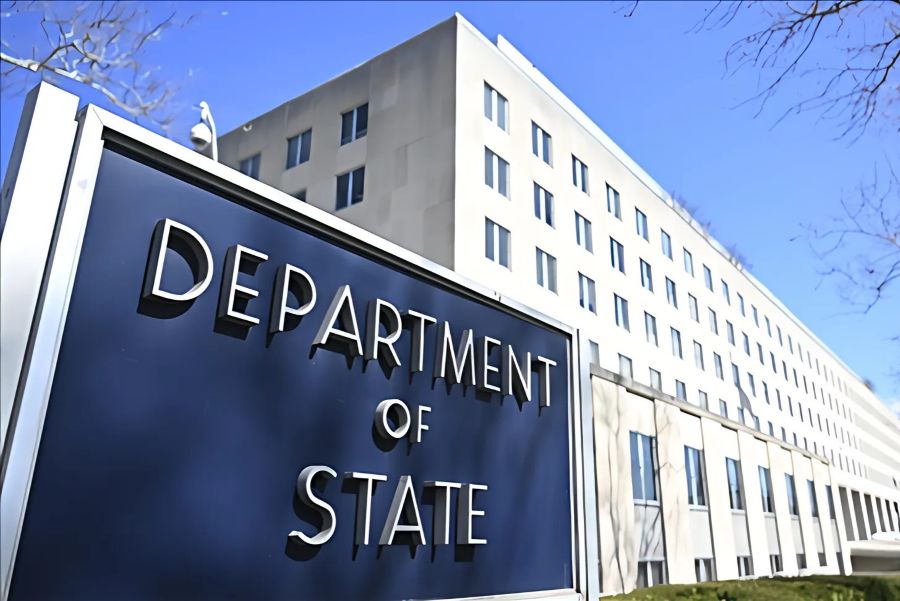
The State Department is closely watching a mysterious fatal illness tied to a plague research institute in Russia after reports raised fears that a worker may have died from pneumonic plague.
The case centers on an employee at the Anti-Plague Research Institute in Shelekhov, in Russia’s Irkutsk region, who developed what Russian health officials have described as “pneumonia of an unknown etiology.”
“We are aware of reports of a fatal case of suspected pneumonic plague in Irkutsk Oblast, Russia. We are monitoring the situation closely with the CDC and our other interagency partners,” a spokesperson from the State Department said.
“Many details have not been confirmed. We encourage Russian authorities to share accurate information quickly and openly,” the spokesperson added.
Russian health authorities have rolled out anti-epidemic measures while insisting there is no evidence the worker’s illness was caused by dangerous pathogens handled at the institute.
Russia’s public health watchdog, Rospotrebnadzor, said “no accidents have been detected at the Irkutsk Anti-Plague Institute while working with pathogenic microorganisms.”
The agency also maintained that “the sanitary and epidemiological situation” in Irkutsk, Shelekhov and the surrounding region is “stable.”
Still, authorities have taken significant precautions.
People who had contact with the infected worker were placed under medical observation, while a hospital in Shelekhov was quarantined as officials investigated the illness.
A Russian lab worker has died and thousands are in quarantine after a plague outbreak.
The World Health Organisation says the pneumonic form of plague is especially contagious and “can trigger severe epidemics”.
@SkyNewsThomas explains everything you need to know about varieties of the disease.
🔗 https://t.co/BhSGP5De4H
— Sky News (@SkyNews) October 5, 2026
Irkutsk Gov. Igor Kobzev said no microorganisms linked to the woman’s professional work were found during testing and that no other employees at the institute had recently sought medical care.
Officials said the identified contacts were not showing symptoms and initial laboratory testing came back negative.
Confusion surrounding the case intensified after Alexei Tsydenov, the head of neighboring Buryatia, publicly addressed reports that the woman may have died from plague.
He wrote that “the woman who died – possibly from the plague – in the Irkutsk Region had not visited Buryatia,” while assuring residents that “there are no plague outbreaks in the republic.”
Authorities have also imposed additional precautions outside the medical system.
The Irkutsk Aluminum Plant in Shelekhov introduced a mask requirement for workers amid conflicting reports circulating throughout the area.
RELATED: Quarantine Declared After Russian Plague Researcher Dies From ‘Unknown Infection’ In Siberia
“Better safe than sorry,” plant director Artem Fominykh wrote while urging employees to “follow the precautions.”
The Centers for Disease Control and Prevention said it is also tracking developments alongside the State Department.
“The safety and security of U.S. citizens is our highest priority,” the CDC said.
The State Department emphasized that there is still no confirmed evidence of a wider plague outbreak.
“Plague is a known disease and is treatable with common antibiotics, especially when treatment starts early. Cases occur naturally in many parts of the world,” the statement added.
Plague is caused by the bacterium Yersinia pestis and can spread through infected fleas, contact with infected animals or, in cases of pneumonic plague, respiratory droplets.
Pneumonic plague is considered the most dangerous form because it affects the lungs and can potentially spread between people.
The disease once devastated populations across Europe, but antibiotics and modern public health measures have made it far more treatable when caught early.
For now, U.S. officials are stopping short of sounding the alarm while pressing Moscow for transparency as questions remain over exactly what killed the Russian lab worker and whether the case poses any broader threat.
POLL: Would You Vote Against ANY Candidate Who Calls Themselves A Socialist?
