
Politics
Obama-Appointed Judge Blocking Trump Agenda Linked To Bolton’s Indictment
U.S. District Judge Theodore Chuang, an Obama-era appointee seated in Greenbelt, Maryland, has once again become a central figure in the clash between the executive and judicial branches — a conflict that has only intensified in the years since President Donald Trump entered the political arena.
Chuang first rose to national attention in 2017, when he issued a nationwide injunction blocking Trump’s second “travel ban,” which sought to restrict entry from six majority-Muslim nations. In his ruling, Chuang wrote that the government’s action could not be separated from Trump’s past campaign rhetoric, arguing that a “reasonable observer” could view the order as motivated by anti-Muslim bias.
“Simply because a decisionmaker made the statements during a campaign does not wipe them from the ‘reasonable memory’ of a ‘reasonable observer,’” he wrote. That interpretation — linking campaign statements to official executive actions — was blasted by conservatives as judicial activism at its peak.
The decision set the tone for a wave of courtroom challenges that would dog the Trump administration for the next four years. Judge Chuang’s involvement didn’t end with immigration policy. In subsequent years, he presided over disputes tied to the U.S. Agency for International Development (USAID) and other executive branch reforms.
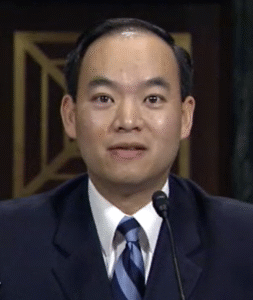
Judge Theodore Chuang
Trump’s efforts to restructure the agency — a move aimed at reducing bureaucracy and consolidating foreign aid oversight — met a judicial roadblock when Chuang temporarily halted implementation pending review. His ruling was viewed by critics as another example of unelected judges blocking the will of the elected executive.
The Lawfare Litigation Tracker later documented more than 220 lawsuits filed against Trump administration actions during his tenure, many originating from decisions like Chuang’s that invited further challenges. The result was a legal arms race between a reform-minded White House and a judiciary increasingly willing to question executive intent.
The courtroom battles soon spilled into the political arena. Earlier this year, Rep. Andy Ogles (R-TN) introduced a resolution calling for the impeachment of Judge Chuang and several other federal judges who had ruled against Trump-era initiatives. In response, the New York City Bar Association issued a statement condemning attempts to impeach judges over ideological disagreements, warning that such efforts “pose a grave threat to judicial independence.”
Now, Judge Chuang is back in the national spotlight as the presiding judge in the 18-count indictment of former Trump National Security Adviser John Bolton. Bolton faces charges related to mishandling classified material following the publication of his memoir and subsequent consulting work. The case, set for a key hearing on November 21, has drawn intense media interest, not only because of Bolton’s high-profile fallout with Trump but also because of Chuang’s history of rulings that curtailed executive power.
Unlike previous Trump-era battles over immigration and bureaucracy, this case centers on classified material and the scope of national security discretion — areas where executive authority is traditionally broad. As Bolton prepares for trial and lawmakers continue to question the role of unelected judges, the tension between the judiciary and executive branch shows no sign of easing. If history is any guide, Chuang’s rulings will not just shape the cases before him — they may help define the limits of presidential power for years to come.
