
Politics
NEW: China Expresses Openness To Buying U.S. Oil
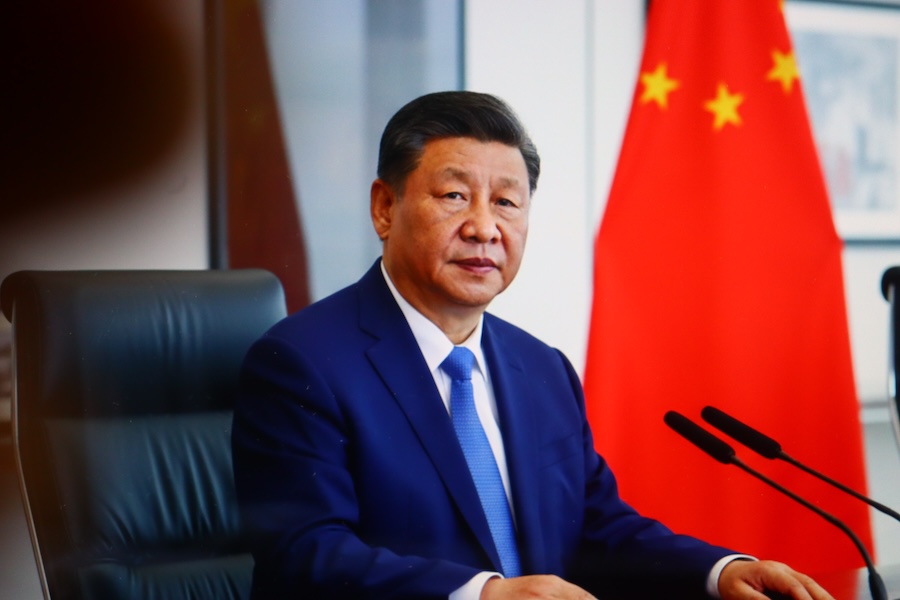
In a notable development amid ongoing U.S.-China trade frictions and Middle East tensions, Chinese President Xi Jinping has expressed interest in purchasing more American oil, according to new statements from the White House.
The development comes amid ongoing tensions in the Persian Gulf, as Iran has effectively blockaded the Strait of Hormuz since the start of the U.S.-Iran conflict on February 28. Prior to the war, roughly one-fifth of the world’s oil supply flowed through the vital waterway.
China had been the leading importer of Iranian oil prior to the start of the conflict. Beijing’s situation has worsened in recent weeks, as President Donald Trump announced a wider blockade of the strait in order to prevent Iranian vessels from transporting oil.
Progress appears to have been made on a potential deal that could see Beijing buying more oil from the United States, however, according to a White House read-out following a bilateral summit between Presidents Donald Trump and Xi Jinping held in Beijing on Thursday.
According to the official White House summary of the two-hour-plus meeting, the leaders agreed that “the Strait of Hormuz must remain open to support the free flow of energy.”
“President Xi also made clear China’s opposition to the militarization of the Strait and any effort to charge a toll for its use, and he expressed interest in purchasing more American oil to reduce China’s dependence on the Strait in the future,” the White House said.
The statement marks a potential thaw in energy trade between the world’s two largest economies. China, the globe’s top oil importer, has historically sourced only a small fraction of its crude from the United States. Imports peaked at approximately 395,000 barrels per day (bpd) in 2020, representing under four percent of China’s total crude purchases.
By 2024, volumes had declined to 193,000 bpd, valued at around $6 billion. However, shipments halted entirely after May 2025 due to a 20% import tariff imposed during the escalating U.S.-China trade war. Beijing offset the shortfall by ramping up purchases from alternative suppliers such as Canada and Brazil.
Shortly after the summit readout, Treasury Secretary Scott Bessent told CNBC that discussions included Beijing buying more American energy, describing Alaskan production as a “natural” fit for China. President Trump, in a Fox News interview with Sean Hannity, went further, stating that Xi had committed to purchases of U.S. soybeans, oil, liquefied natural gas, and other energy products, alongside 200 Boeing 737 jets.
Trump also noted Xi’s offer to assist with Iran-related issues to keep the strait open, stating, “He did offer, he said ‘if I can be of any help at all, I would like to be of help.’” While Trump framed these as agreements, the White House readout used more measured language of “expressed interest.”
Chinese state media readouts of the Xi-Trump meeting omitted any reference to oil purchases, the Strait of Hormuz, or energy deal, while Beijing’s foreign ministry did not immediately respond to requests for comment. This discrepancy highlights the cautious optics on the Chinese side, where such announcements could be viewed through the lens of broader trade negotiations.
U.S. officials have flagged Chinese purchases of American energy and agricultural goods as potential components of a larger deal, though no concrete terms or timelines have been released.
RELATED: U.S. Announces New Sanctions Related To Shipping Iranian Oil To China
