
Politics
US Deploys ‘Doomsday’ Nuclear Command Planes To Middle East
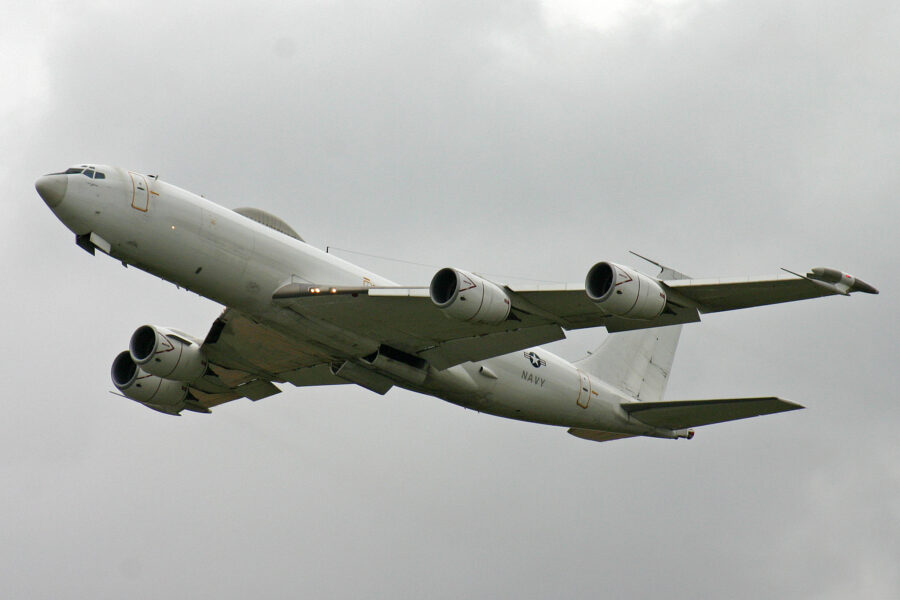
The U.S. military’s fleet of so-called “Doomsday planes” has been spotted in the air as tensions spike following the outbreak of war with Iran.
Flight-tracking data shows multiple launches of the Navy’s E-6B Mercury strategic airborne command aircraft since the conflict began Feb. 28.
The hulking aircraft, built on modified Boeing 707 airframes, are designed to keep America’s nuclear command system alive even if the country is under attack.
The E-6B essentially acts as a flying command post and communications hub for the president and the Secretary of War, equipped with specialized antennas capable of reaching nuclear-armed submarines operating deep underwater.
The aircraft can also communicate with satellites, land-based command centers and underground missile facilities, giving U.S. leaders the ability to coordinate a nuclear response even if ground networks are destroyed.
Two E-6B flights were tracked over the United States on March 2. One aircraft traveled from the Gulf Coast before landing at Naval Air Station Patuxent River in Maryland. Another took off from Offutt Air Force Base in Nebraska and later returned there.
TRENDING NOW: Trump Furious After Israel’s Shocking Move In Iran Conflict
Since those flights, military news outlets have reported additional E-6B launches heading across the Atlantic toward the Persian Gulf.
The Pentagon declined to comment on the reported flights “due to operations security.”
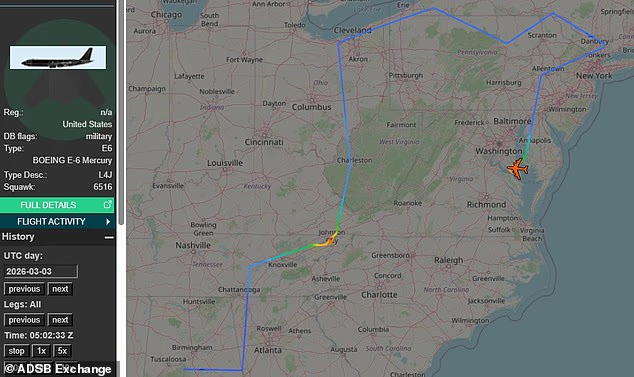
Tracking data shows E-6B flight
In practical terms, the aircraft allow orders from President Trump or other top officials to reach Navy nuclear submarines and missile forces even if traditional communication systems are knocked out, the Daily Mail explains.
During major crises, the planes are dispatched to strategic locations and kept airborne or near critical regions to maintain communication links if ground bases are destroyed or jammed.
The heightened activity comes as U.S. forces and facilities across the Middle East face escalating threats. American bases, embassies and civilian targets have been hit by Iranian missile barrages during the first week of the conflict.
Officials note that the aircraft are also routinely deployed for training exercises and readiness drills, allowing the military to maintain the capability without signaling that a strike is imminent.
TRENDING NOW: Trump Furious After Israel’s Shocking Move In Iran Conflict
Still, the risk of nuclear escalation has risen sharply since the United States and Israel launched initial strikes on Tehran.
China and Russia have both warned that the conflict could spiral into a wider regional war.
Reports also indicate that nuclear-armed Russia has begun providing Iran with intelligence on U.S. troop positions across the Middle East, a development some analysts fear could push the crisis toward a broader confrontation.
Despite first entering service roughly four decades ago, the E-6B remains one of the most critical aircraft in America’s nuclear command structure — built to keep the chain of command alive even in the worst-case scenario.
Download the FREE Trending Politics App to get the latest news FIRST >>
